















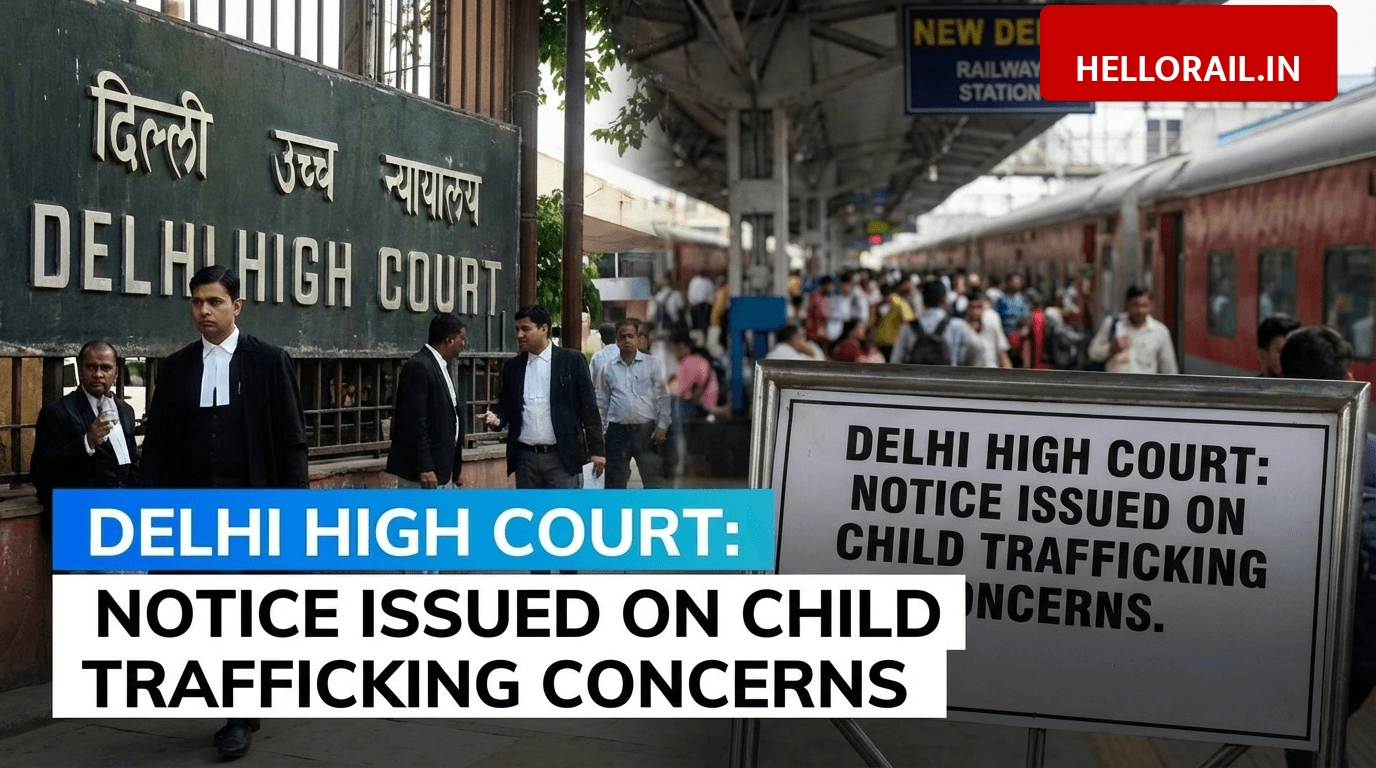

The Delhi High Court raised serious concerns regarding child trafficking in the national capital, describing the city as a mandi for such illegal activities. During a hearing on April 2, 2026, the court noted that railway stations and trains have become primary nodes for trafficking. A Public Interest Litigation highlighted the alarming rise in missing minors and the failure to effectively implement safety protocols on railway premises.
👉: Delhi Metro to Start Operations from 3 AM on April 5 for Marathon।
What are the key observations made by the Delhi High Court?
The bench led by Chief Justice D.K. Upadhyaya observed that child trafficking continues unabated despite various judicial orders. The court expressed dissatisfaction with the implementation of Standard Operating Procedures by the Ministry of Railways and other bodies. It specifically pointed out that a simple walk around railway stations for two hours reveals the gravity of the situation. The court has now scheduled a follow-up hearing for July 10 and asked the NCPCR for data and suggestions.
What is Operation Milap and how many children were rescued?
Delhi Police continues its efforts through Operation Milap to trace missing persons, including minors, across the city. In March 2026, the South-West District Police successfully reunited 155 missing persons with their families, which included 39 children. The search operations rely on local inquiries, CCTV analysis, and coordination with transport workers like bus drivers and vendors.
| Category | Traced in March 2026 (South-West) | Total Traced in 2026 So Far |
|---|---|---|
| Minors | 39 | 98 |
| Adults | 116 | 250 |
| Total | 155 | 348 |
Which agencies are involved in the rescue operations?
Multiple agencies work together to identify and rescue children from railway stations and transit hubs. The Railway Protection Force reported rescuing over 84,000 children between 2018 and 2024. Current operations involve the Delhi Police Anti-Human Trafficking Unit (AHTU), the District Missing Persons Unit (DMPU), and the National Commission for Protection of Child Rights (NCPCR). Civil society groups like the Just Rights for Children Alliance also play a major role in bringing these issues to the judiciary.