


















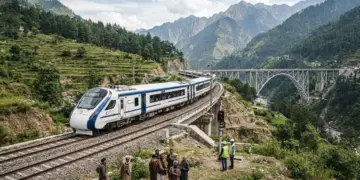





Indian Railways is implementing world-class technology in the Rishikesh-Karnaprayag rail project to tackle earthquake risks in Uttarakhand. The project introduces India’s first floating rail tunnel junction in the Byasi-Devprayag section. This innovative design allows the tunnel structure to remain flexible during seismic movements, ensuring safety for passengers and the rail network in the Himalayan region.
How does the earthquake resistant technology work?
The tunnels are built using double-arc seismic isolation technology which helps them behave like shock absorbers. During an earthquake, the structure can move slightly and then return to its original position to prevent structural collapse. RVNL has also installed a rock monitoring system inside the tunnels. This system is so sensitive that it can detect changes of even 1 millimeter in the tunnel walls. Any such movement triggers an immediate alarm in the control room at Rishikesh for quick action.
What is the current status of the project?
The project has seen significant progress with nearly 73 percent of the physical work completed. Rail Vikas Nigam Limited (RVNL) has shared the following data regarding the construction status:
| Feature | Details |
|---|---|
| Total Project Length | 125.20 km |
| Number of Stations | 12 Stations |
| Main Tunnel Completion | 99 km out of 104 km |
| Escape Tunnel Completion | 94 km out of 98 km |
| Current Expenditure | Rs 27,881 crore |
| New Completion Target | December 2028 |
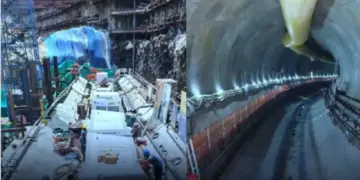
The project uses advanced methods like the New Austrian Tunnelling Method (NATM) and Tunnel Boring Machines (TBM) for safe construction. The 14.57 km Devprayag-Janasu tunnel has already achieved a breakthrough and is currently the longest railway tunnel in the country.