















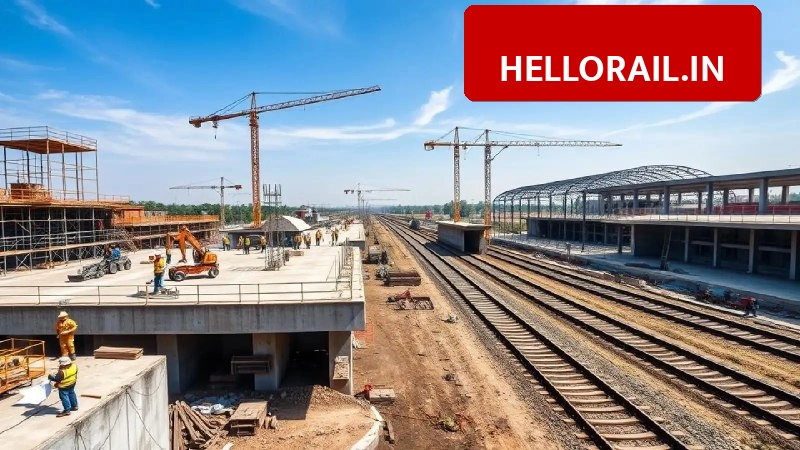

The expansion of the Bodaki Railway Station in Greater Noida into a Multi-Modal Transport Hub (MMTH) has reached a major milestone. Around 1500 to 1800 families from seven villages have officially agreed to provide their land for the project. This consensus removes a significant hurdle for the development of what is expected to be the largest railway terminal in the Delhi-NCR region, aimed at reducing the passenger load on Anand Vihar and New Delhi stations.
📰: Saharsa Railway Station redevelopment: New building and modern facilities now open for passengers।
Project specifications and terminal capacity
The proposed Greater Noida Terminal will be spread across an area of approximately 267 acres. It is designed to handle high passenger traffic with modern infrastructure to support long-distance travel. The facility will specifically cater to trains heading towards Eastern India, including states like Bihar and West Bengal. The development is part of the Delhi-Mumbai Industrial Corridor (DMIC) and is being executed by DMIC-IITGNL.
| Feature | Details |
|---|---|
| Total Land Area | 267 Acres |
| Number of Platforms | 12 to 13 |
| Number of Yard Lines | 63 to 98 |
| Daily Train Capacity | 70 to 100 Trains |
| Estimated Project Cost | Approximately 1,685 Crore |
| Connectivity Hub | Train, Metro, and Bus integration |
Metro expansion and connectivity updates
The central government has recently approved the extension of the Noida Metro Aqua Line to support the Bodaki hub. A 2.6 km elevated track will be constructed from the existing Depot Station to the new terminal. This extension will include two new stations at Junpat and Bodaki with a budget of 416.34 crore. The metro project is expected to be completed within three years, providing seamless connectivity for passengers traveling to and from the upcoming railway terminal.