






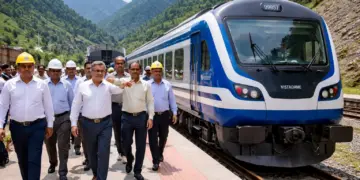










South East Central Railway (SECR) has successfully commissioned a modern communication system in the 331-meter-long Bhannwartank tunnel located on the Bilaspur-Katni route. This initiative aims to solve the long-standing issue of signal drops and communication gaps within this century-old high-risk structure. The installation ensures seamless connectivity for train operations and maintenance staff who previously faced difficulties in communicating while inside the tunnel.
How does the new communication technology work?
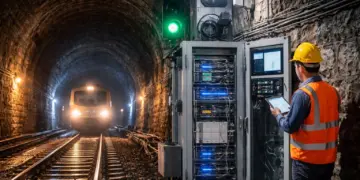
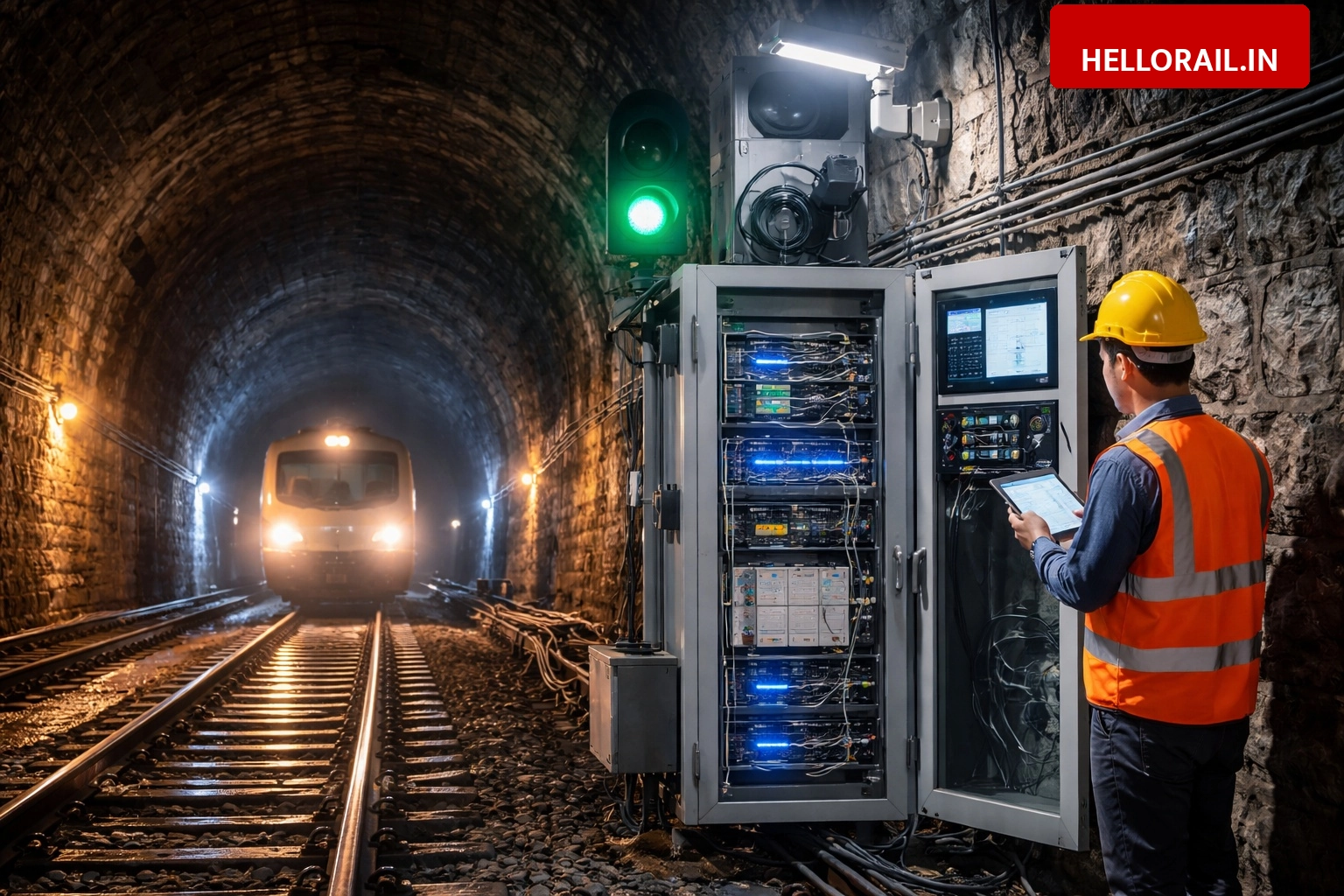
The newly installed system is based on Very High Frequency (VHF) technology, which provides a strong and clear signal even in difficult conditions where normal mobile or wireless signals fail. This technical setup includes an Optical Master Unit (OMU) at the station connected to an Optical Remote Unit (ORU) inside the tunnel via an optical fiber network. The radio signals are converted into optical signals for transmission and then converted back into radio signals within the tunnel. To ensure constant signal availability, leaky cables have been used throughout the 331-meter stretch.
Key features and technical updates of the project
The Bhannwartank tunnel was built in 1907 during the British era and is more than 117 years old. For many years, the lack of proper communication in this section was a major challenge for SECR. The project involved several critical technical steps to ensure its success:
- Optical Fiber Connectivity: Installation of a robust fiber network to carry signals without loss.
- Leaky Cable Technology: Ensures every part of the tunnel receives consistent signal strength for handheld VHF radios.
- Power Backup: Dedicated UPS systems have been installed to provide uninterrupted power supply to the communication equipment.
- Safety Enhancements: Maintenance staff can now coordinate better during emergencies or routine track inspections.
Previously, trains had to pass through this tunnel at a restricted speed of 10 kmph due to its old condition, while a newer tunnel built in 1966 allowed for 45 kmph. With the successful commissioning of this modern system, the coordination between the station and the staff inside the tunnel remains constant in both Up and Down directions.