

















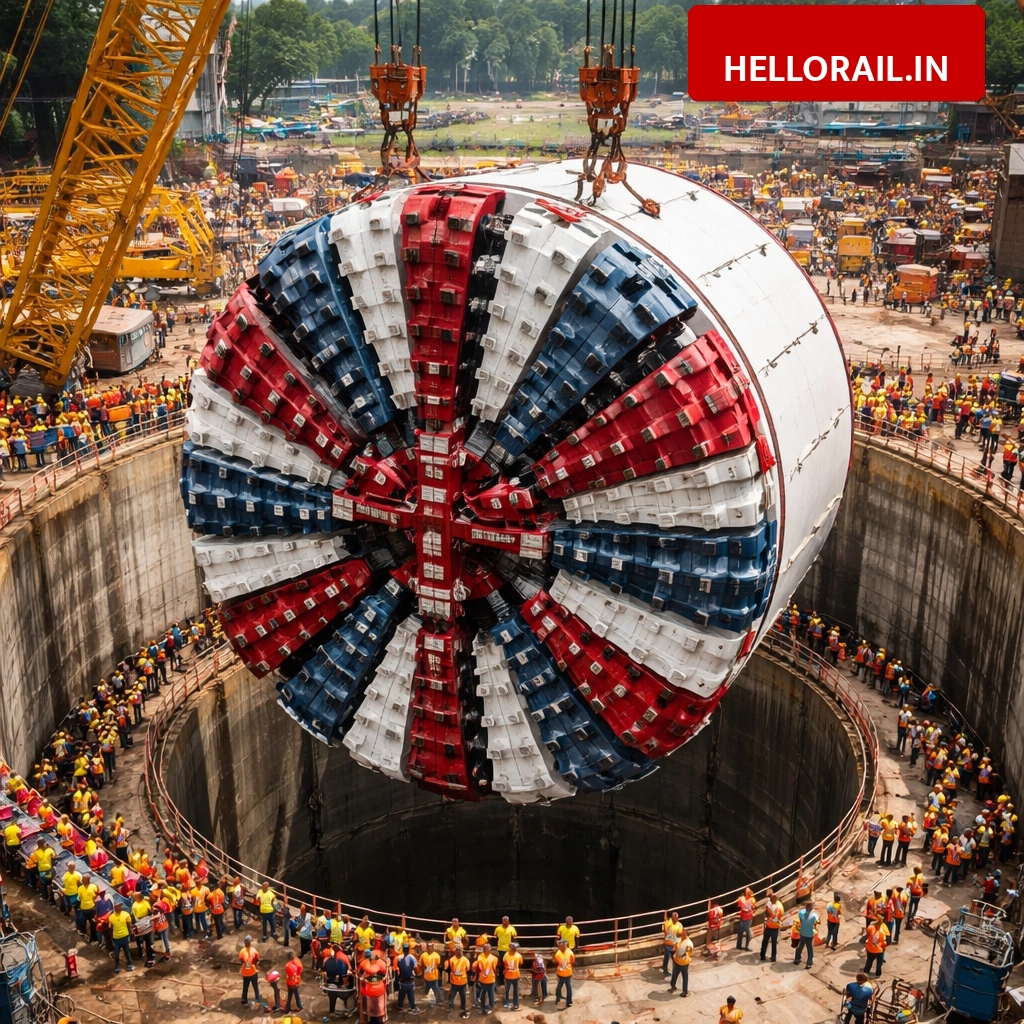

The Mumbai-Ahmedabad Bullet Train project reached a major milestone on May 17, 2026. Union Minister Ashwini Vaishnaw announced the successful lowering of the railway’s largest Tunnel Boring Machine (TBM) cutter head at Vikhroli, Mumbai. This massive engineering piece is essential for digging the underground section of the high-speed rail corridor.
What are the technical details of this TBM cutter head?
The cutter head is a giant piece of machinery weighing 350 tonnes and measuring 13.6 metres in diameter. It is the largest ever used for rail tunnel construction in India. To give an idea of its size, its weight is roughly equal to 250 midsize passenger SUVs. The part arrived in five separate shipments and was put together using 1,600 kg of high-precision welding.
How will this machine help in the Bullet Train project?
This TBM is designed to dig a single large tunnel that will fit both the up and down tracks of the bullet train. It is part of a 21-km underground stretch between Bandra Kurla Complex (BKC) and Shilphata. A significant part of this includes India’s first 7-km undersea rail tunnel beneath Thane Creek. While 5 km is already done using the NATM method, the remaining 16 km will be bored using these TBMs.
Key Project Specifications
| Feature | Details |
|---|---|
| Cutter Head Diameter | 13.6 Metres |
| Cutter Head Weight | 350 Tonnes |
| TBM Total Length | Approximately 96 Metres |
| Tunnel Depth | 25 to 114 Metres |
| TBM Supplier | Herrenknecht (Germany) |
| Total Underground Stretch | 21 Kilometres |
Frequently Asked Questions (FAQs)
When will the tunnelling work actually start?
Initial tunnelling drives are expected to begin by July 2026, and the main tunnelling operations are projected to start by October 2026.
What is special about the tunnel being built in Mumbai?
The project includes a 21-km underground section, which features India’s first 7-km undersea rail tunnel beneath Thane Creek.