







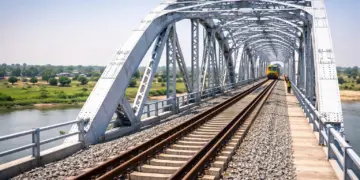
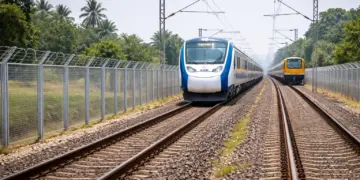








Etihad Rail has officially unveiled the UAE’s first dedicated rail ambulance service in partnership with the National Ambulance and Department of Health – Abu Dhabi. This new service utilizes the existing 900km national rail network to provide rapid emergency response to hard-to-reach locations. The main focus remains on the Al Dhafra region and Hajar Mountains where traditional road ambulances often face difficulties.
👉: Mumbai Local to Change Forever with 238 AC Vande Metro Trains, Bids Invited for Mega Upgrade।
How the Rail Ambulance Service Works
The rail ambulance is fully integrated with the National Ambulance’s command center for seamless dispatch during emergencies. It is designed primarily for emergency medical evacuations and transferring critically ill patients from remote clinics to major trauma centers in Abu Dhabi and Dubai.
Under official railway operating rules, these ambulance trains are granted emergency priority on the tracks. This allows them to bypass freight or passenger schedules when necessary, functioning similarly to how a fire truck operates on the road to reach patients quickly.
Medical Facilities and Staffing on Board
Each unit is staffed by highly trained paramedics and emergency doctors to ensure patient safety during transit. The carriages are equipped with advanced life support technology, including on-board ventilators and cardiac monitors required for critical care.
The specialized carriages have the capacity to stabilize multiple patients simultaneously. This feature makes the rail ambulance a critical asset for managing large-scale incidents or disasters where many people might need urgent care at the same time.
Cost and Travel Benefits for Residents
There is no direct cost to residents or citizens for emergency use, as the service is part of the government-funded emergency response infrastructure. This transport solution reduces response times to remote western regions by up to 50 percent compared to road travel.
Unlike air ambulances or helicopters, which can be grounded by heavy fog or sandstorms, the rail ambulance provides a stable transport solution. It remains operational and weather-independent, ensuring patients can be moved safely even during poor weather conditions.