


























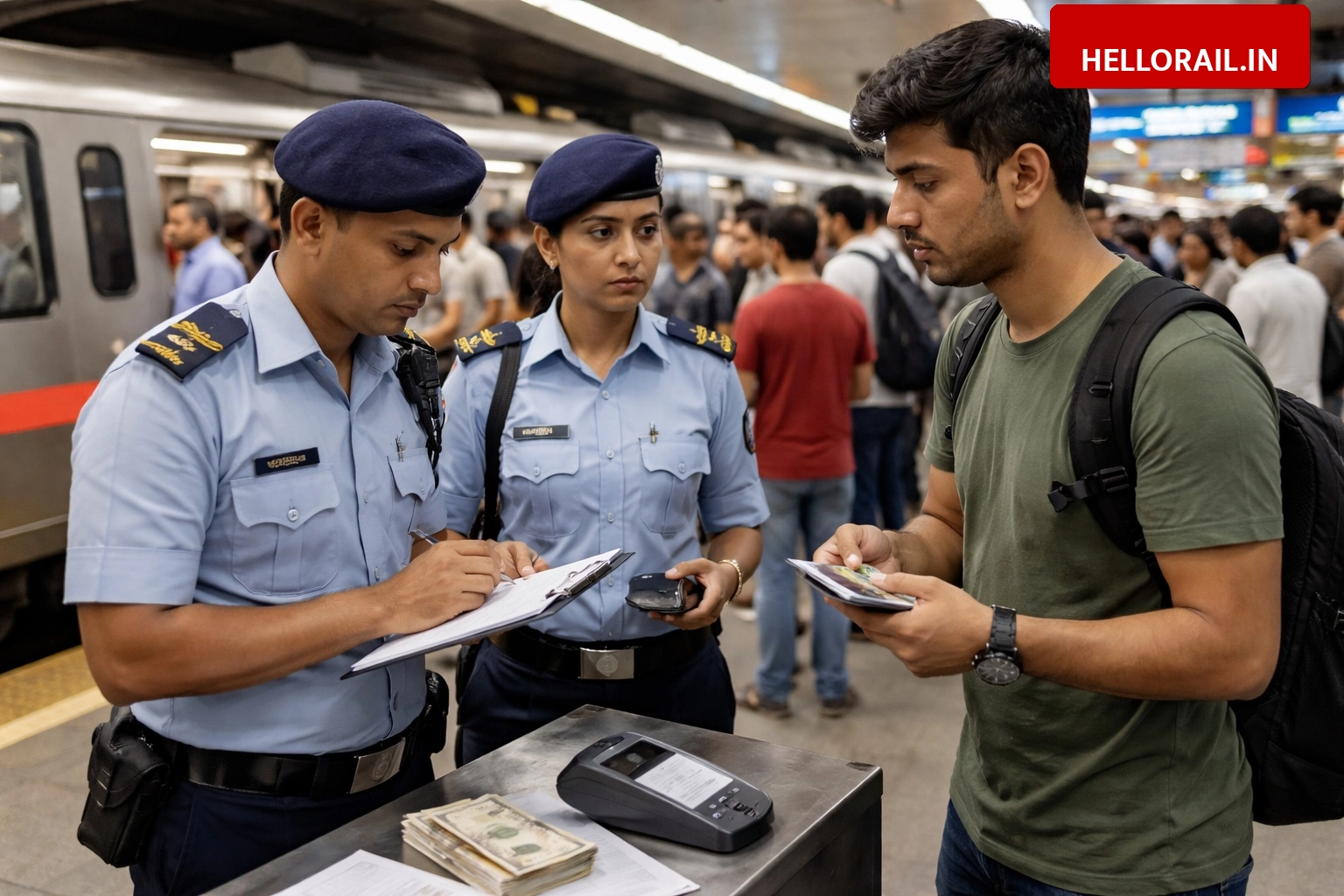

Commuters on the Delhi Metro will soon face much higher penalties for breaking rules. The Centre has proposed major changes to the Metro Railways (Operation and Maintenance) Act, 2002. These amendments, introduced through the Jan Vishwas (Amendment of Provisions) Bill, 2026, aim to replace some criminal punishments with significantly higher monetary fines, impacting daily travellers directly. The bill was brought before the Lok Sabha on Friday, March 27, 2026.
ℹ️: Jamalpur-Bhagalpur Rail Route: 3rd Tunnel Survey Done, Trains to Run at 130 Kmph Soon।
What are the Proposed New Fines?
The proposed changes target several common offenses within the Delhi Metro system. The government wants to ensure better compliance by increasing the financial penalties for rule-breakers. Here is a breakdown of how the fines are set to change:
- Sitting on the metro floor, drunkenness, nuisance, spitting, quarreling, or carrying offensive materials: The fine for these offenses, currently between ₹200 and ₹500, is proposed to increase to up to ₹2,500.
- Writing or pasting anything in metro compartments and refusing to remove it: The existing fine of up to ₹1,000, which also included a potential 6 months imprisonment, is proposed to be raised to up to ₹10,000. The imprisonment clause is also set to be removed.
- Unlawful entry into coaches reserved for women: The current fine of ₹250, along with a provision for up to 3 months imprisonment, is proposed to increase to up to ₹5,000. The imprisonment provision for this offense will also be removed.
Who is Behind These Changes and When Were They Proposed?
These significant amendments to the Metro Railways (Operation and Maintenance) Act, 2002, have been proposed by the Central Government. The Jan Vishwas (Amendment of Provisions) Bill, 2026, which outlines these changes, was introduced in the Lok Sabha on Friday, March 27, 2026.
Minister of State for Commerce and Industry Jitin Prasada brought the bill forward. The Delhi Metro Rail Corporation (DMRC) is responsible for implementing metro rules, and it already works with the Central Industrial Security Force (CISF) and Delhi Metro Rail Police (DMRP) to monitor and fine violators. These proposed updates seek to modernize the regulatory framework and ensure that rules are followed more strictly by commuters.