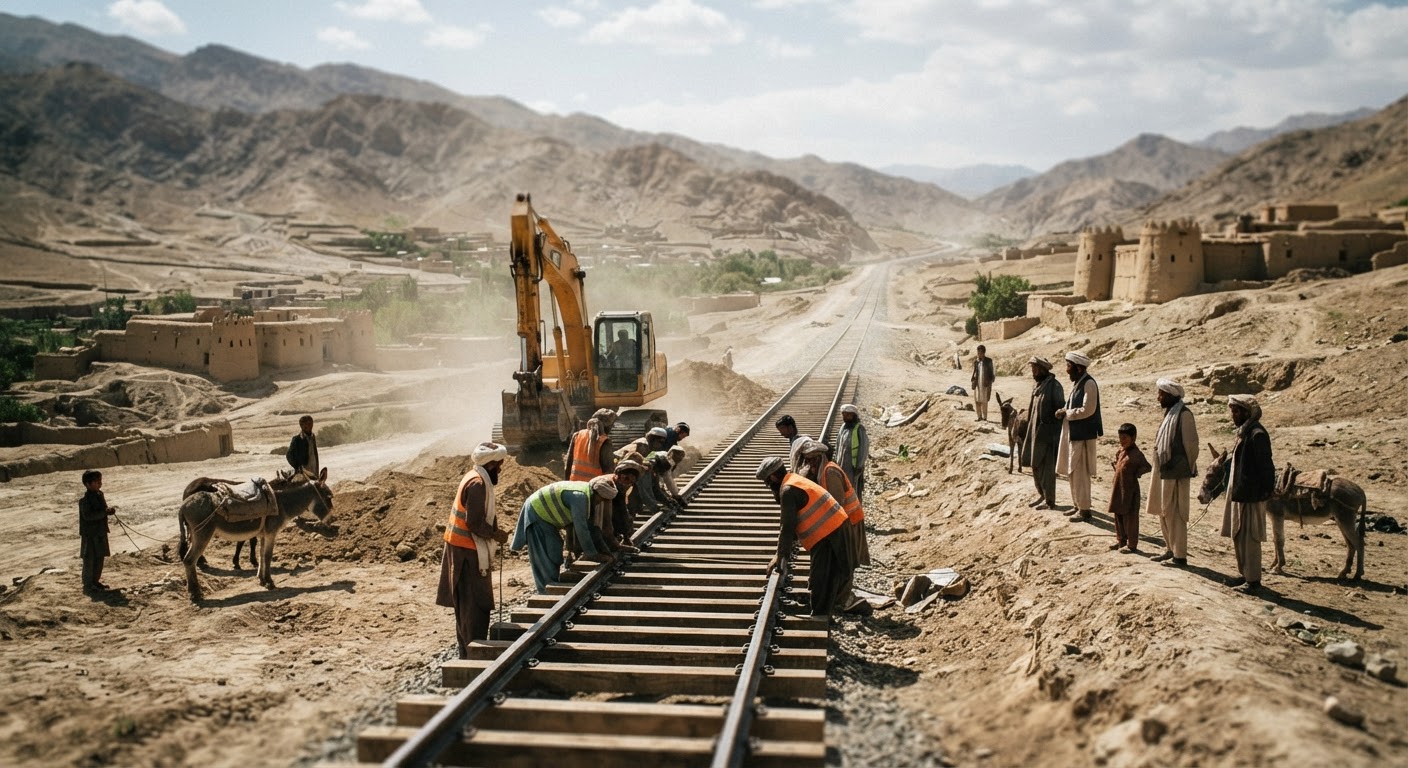
Afghanistan is taking a major step towards transforming its transport sector by planning the construction of more than 1,500 kilometers of new railway lines. This ambitious infrastructure expansion aims to establish the nation as a vital regional transit hub and improve connectivity from Turkmenistan down to Pakistan's Balochistan, as well as linking Kandahar with the capital city of Kabul. Afghanistan currently operates 400 kilometers of functional railway lines connected to Uzbekistan, Turkmenistan, and Iran through Hairatan, Aqina, Torghundi, and Khaf-Herat routes. Survey and design work is currently underway for 1,537 kilometers of new railway lines across five major routes in Afghanistan. The Afghan Ministry of Public Works is funding these projects domestically while seeking additional investments from commercial banks and international partners. The expansion of this extensive railway network is expected to significantly reduce logistics costs and boost international trade.
The Afghan Ministry of Public Works, according to spokesperson Mohammad Ashraf Haqshenas, is actively overseeing the survey and design phase for five key corridors. These include the
Torghundi–Herat, Herat–Kandahar, Kandahar–Spin Boldak, Kabul–Kandahar, and Andkhoy–Sheberghan routes. While the government is utilizing domestic funding, discussions are ongoing with commercial banks, various countries, and interested investors to secure the capital needed for actual construction. However, current media reports have not specified which foreign nations might be assisting with the ongoing technical surveys and design processes.
Economic analysts in the region believe that developing robust transit corridors will unlock substantial economic growth. Experts point out that rail freight is a much more cost-effective method for goods transportation compared to roadways.
Establishing these new rail links will help lower overall transportation costs and directly reduce commodity prices for consumers. Furthermore, seamless rail integration with neighboring nations will allow Afghanistan to expand its export markets and improve regional cooperation. Ultimately, the success of this grand railway vision depends heavily on securing reliable long-term financing, timely project execution, and maintaining stable geopolitical relations across South and Central Asia.