Ahmedabad-Dholera Semi High-Speed Rail: Cabinet approves India’s first indigenous project
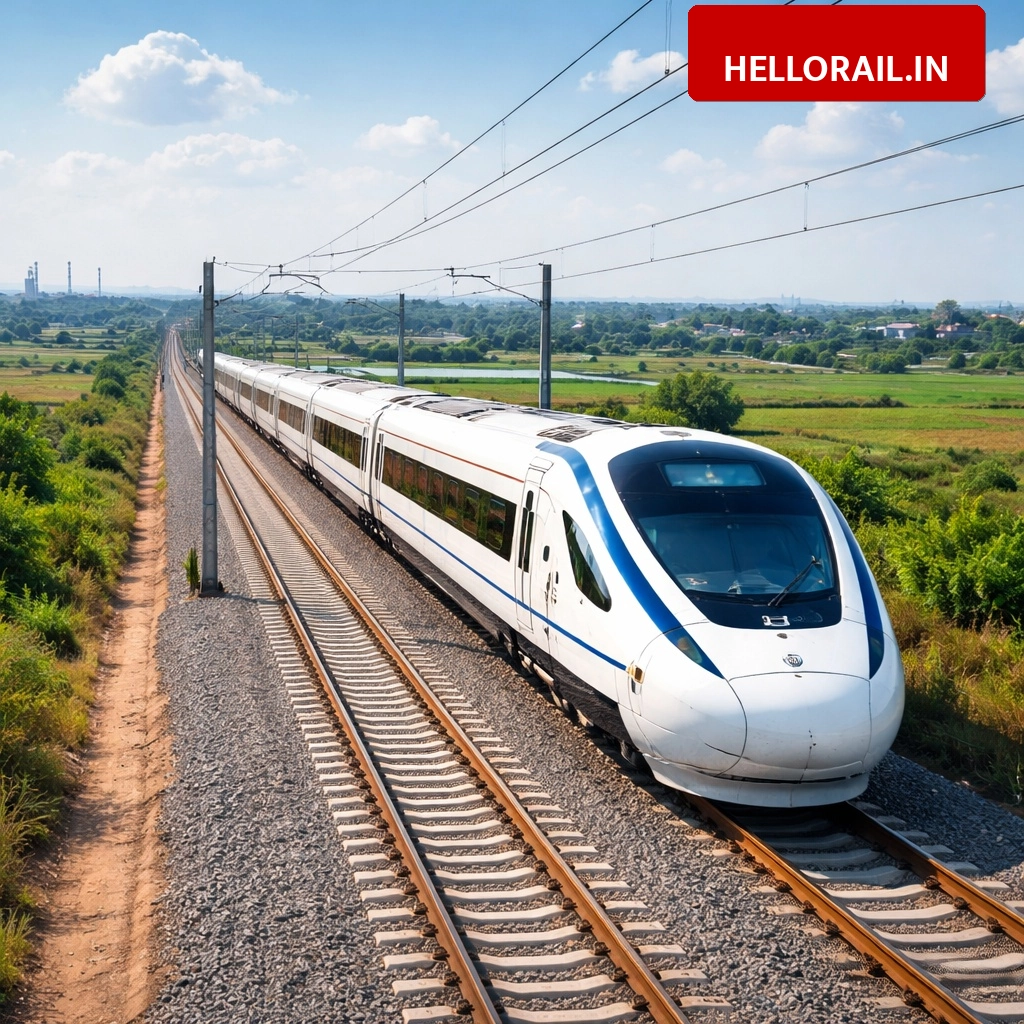
The Union Cabinet, led by Prime Minister Narendra Modi, approved the Ahmedabad (Sarkhej)-Dholera semi high-speed double line railway project on May 13, 2026. This project will be India’s first semi high-speed rail system developed using indigenous technology. The project aims to provide fast connectivity between Ahmedabad, Dholera SIR, the upcoming Dholera International Airport, and the Lothal National Maritime Heritage Complex.
🗞️: Gujarat Railway Expansion: Union Cabinet approves 134 km new network in Ahmedabad district।
Key details of the project
| Feature | Details |
|---|---|
| Total Length | 134 km (Double Line) |
| Project Cost | ₹20,667 crore |
| Train Speed | 220 km/h |
| Travel Time | 48 minutes (Ahmedabad to Dholera) |
| Completion Target | 2030-31 |
| Track Gauge | 1676 mm Broad Gauge |
How will this project benefit the public
This rail line will benefit around 5 lakh people across 284 villages. It will be the first system in the world to run mixed traffic, meaning both passenger and freight trains will use the same 1676 mm broad gauge tracks. Rail Minister Ashwini Vaishnav described this as a symbol of a modern and self-reliant transport system for New India.
Environmental and economic impact
The project is part of the PM Gati Shakti National Master Plan. It will help reduce oil imports by about 0.48 crore liters per year. Additionally, it will cut CO2 emissions by 2 crore kilograms annually, which is equivalent to planting nearly 10 lakh trees.
Frequently Asked Questions (FAQs)
What is the travel time between Ahmedabad and Dholera after this project?
Trains will run at a speed of 220 km/h, reducing the travel time between Ahmedabad and Dholera to just 48 minutes.
When is the project expected to be completed?
The project has a target completion date of 2030-31 and is being implemented by the Ministry of Railways.