Air India Flight Diverted to Jaipur After Hijack Alert
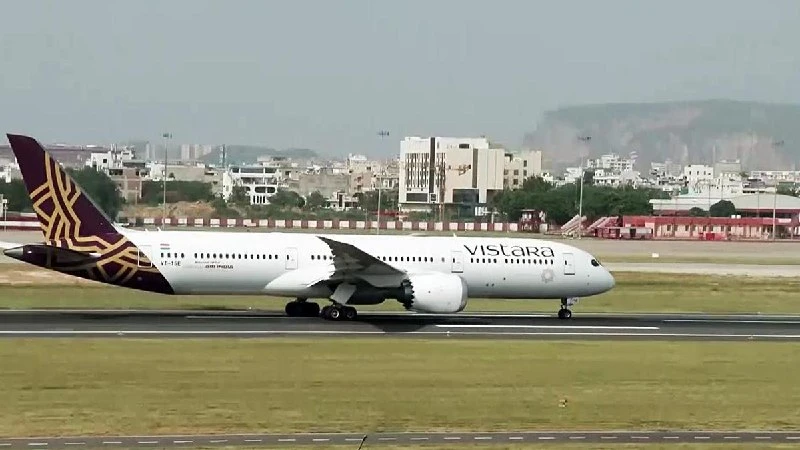
An Air India flight was diverted to Jaipur following a sudden hijack alert on Wednesday, October 14, 2026. The aircraft, which was operating from Frankfurt to Delhi, was forced to make an emergency landing after a security signal was transmitted to air traffic control.
The Squawk Code Emergency
The aircraft, identified as flight AI2030, was carrying 293 passengers and 13 crew members. While navigating through the Mumbai Flight Information Region, the Pilot-in-Command transmitted Squawk Code 7500 to Air Traffic Control (ATC). This specific code is an internationally recognized signal used to communicate unlawful interference or a hijacking attempt.
Massive Security Response in Jaipur
The flight landed safely at Jaipur International Airport at 9:35 AM IST and was immediately moved to an isolation bay to ensure the safety of the passengers and the surrounding area. A massive security operation was launched, involving several key agencies:
- The Central Industrial Security Force (CISF)
- Local Police forces
- The Bomb Detection and Disposal Squad (BDDS)
High-level security teams, including the National Security Guard (NSG) and the Anti-Terrorism Squad (ATS), were also placed on standby or actively involved in managing the situation. Assistant Commissioner of Police, Malviya Nagar, Shiv Dayal, confirmed that the emergency landing was a direct response to the reported security threat.
False Alarm and Passenger Screening
Following a thorough investigation and security sweep, the alert was subsequently declared a false alarm. Air India stated that the diversion was carried out due to a perceived security concern. To maintain safety protocols, all passengers were de-boarded and taken to the terminal for intensive screening. Once cleared, they were permitted to re-board the same aircraft.
The flight eventually resumed its scheduled journey to Delhi at 2:37 PM IST, landing at Indira Gandhi International Airport at 3:11 PM IST.
Investigation Into Technical Glitch
The Directorate General of Civil Aviation (DGCA) and the Bureau of Civil Aviation Security are currently conducting preliminary investigations to understand the root cause of the alert. Authorities are exploring whether the transmission was the result of:
- A technical glitch within the aircraft
- A transponder error
- A potential software malfunction within the ATC system
Sources have noted that while the emergency code was transmitted, the pilots had reported normal operations on board. Officials further indicated that the crew followed all ATC instructions and were not at fault for the incident.