Bilaspur-Manali-Leh Railway: India to Build World's Highest Station
India's ₹1.31 lakh crore Bilaspur-Manali-Leh railway project aims to build the world's highest station at Tanglang La pass.
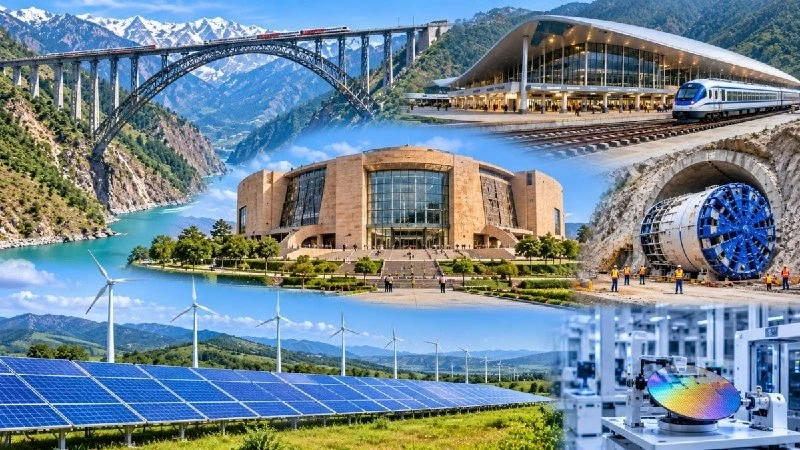
The Indian government is moving forward with its ambitious plans for the 489-kilometer Bilaspur-Manali-Leh railway project. This strategic broad-gauge line is designed to provide essential all-weather connectivity to the sensitive Ladakh border region, overcoming some of the most difficult geographical barriers in the world.
A Record-Breaking Station in Ladakh
One of the most spectacular features of this proposed route is the plan to construct the world's highest railway station. Situated beneath the Tanglang La pass in Ladakh, the station is expected to reach an incredible elevation of approximately 5,256 to 5,359 meters. If realized, this station will surpass the current record holder, China's Tanggula station, which sits at 5,068 meters.
Massive Engineering and Strategic Logistics
The scale of this project is immense, with an estimated total cost of approximately ₹1.31 lakh crore. Due to the extreme Himalayan topography, the design incorporates a massive 270 kilometers of tunnels. These tunnels will traverse several key regions, including:
- Sundernagar
- Mandi
- Manali
- Sissu
- Darcha
- Keylong
- Sarchu
- Pang
- Rumtse
- Upshi
- Kharu
To further support military logistics in the border areas, a 13-kilometer extension from Leh to Sasharthang has also been proposed.
Planning Status and Legal Hurdles
While the Ministry of Railways has successfully completed the final location survey and the Detailed Project Report (DPR), the project is still in the planning phase. It has yet to receive final construction approval or a definitive completion timeline. The project has also encountered legal challenges; in October 2026, the Himachal Pradesh High Court quashed a preliminary land acquisition notification, citing the government's failure to comply with statutory requirements for extending deadlines.
A Vision for National Self-Reliance
This massive infrastructure undertaking aligns with Prime Minister Narendra Modi's broader strategy for national self-reliance. The goal is to domesticate the manufacturing of high-end technologies required for such projects, including tunnel boring machines and rare earth magnets. By building domestic capabilities in deep technology and infrastructure, India aims to reduce foreign dependency and strengthen its economic resilience.