Bilaspur-Manali-Leh Railway: India to Build World's Highest Station!
India plans the ₹1.31 lakh crore Bilaspur-Manali-Leh railway, featuring the world's highest station at Tanglang La in Ladakh.
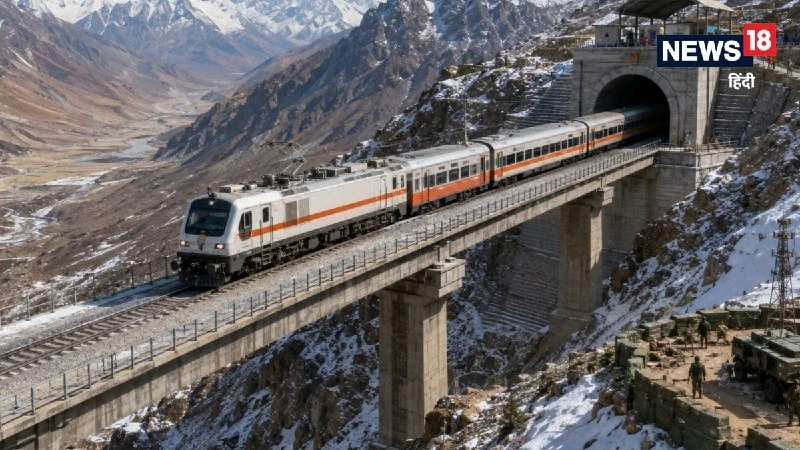
India is moving closer to realizing a monumental engineering dream: the Bilaspur-Manali-Leh railway line. This ambitious 489-kilometer broad-gauge corridor is designed to provide all-weather connectivity to the strategically vital Ladakh region, potentially redefining high-altitude infrastructure across the globe.
The project, which carries an estimated cost of approximately ₹1.31 lakh crore, is currently in the planning stage. The Ministry of Railways has already completed the preliminary survey and prepared the Detailed Project Report (DPR), with the initiative now awaiting final funding decisions and construction approval.
Surpassing China: The Tanglang La Milestone
One of the most breathtaking features of the proposed route is the construction of a station at Tanglang La in Ladakh. Situated at an extreme altitude of approximately 5,256 to 5,359 meters (roughly 17,244 to 17,500 feet), this station is designed to become the highest railway station in the world. If completed, it will surpass the height of China’s Tanggula station, which stands at 5,068 meters.
Engineering Through the Himalayas
Navigating the treacherous Himalayan terrain requires unprecedented engineering solutions. To manage the rugged landscape, approximately 55 percent of the total track length—about 270 kilometers—is scheduled to pass through 62 tunnels.
The strategic corridor will link Bilaspur in Himachal Pradesh to Leh, traversing several critical locations, including:
- Sundernagar and Mandi
- Manali and Sissu
- Darcha and Keylong
- Sarchu and Pang
- Rumtse, Upshi, and Kharu
High-Altitude Passenger Comfort
Due to the extreme environment and low oxygen levels at such heights, the project incorporates advanced technology to ensure passenger safety. Plans include the use of pressurized and heated cabins, along with dedicated oxygen support systems to assist travelers during the journey.
Strategic Importance and Administrative Challenges
The Ministry of Defence has designated this railway line as a vital strategic asset. It is intended to ensure year-round mobility for both military and civilian purposes, overcoming the seasonal isolation often faced in the high-altitude regions.
However, the project has encountered significant administrative hurdles. Legal scrutiny regarding land acquisition has been a recurring theme, including an October 2026 Himachal Pradesh High Court decision that quashed a preliminary land acquisition notification due to procedural non-compliance.