Bina Gulabganj Automatic Signaling Now Live for WCR
West Central Railway has commissioned the Bina Gulabganj automatic signaling system to increase train capacity and improve operational speed.
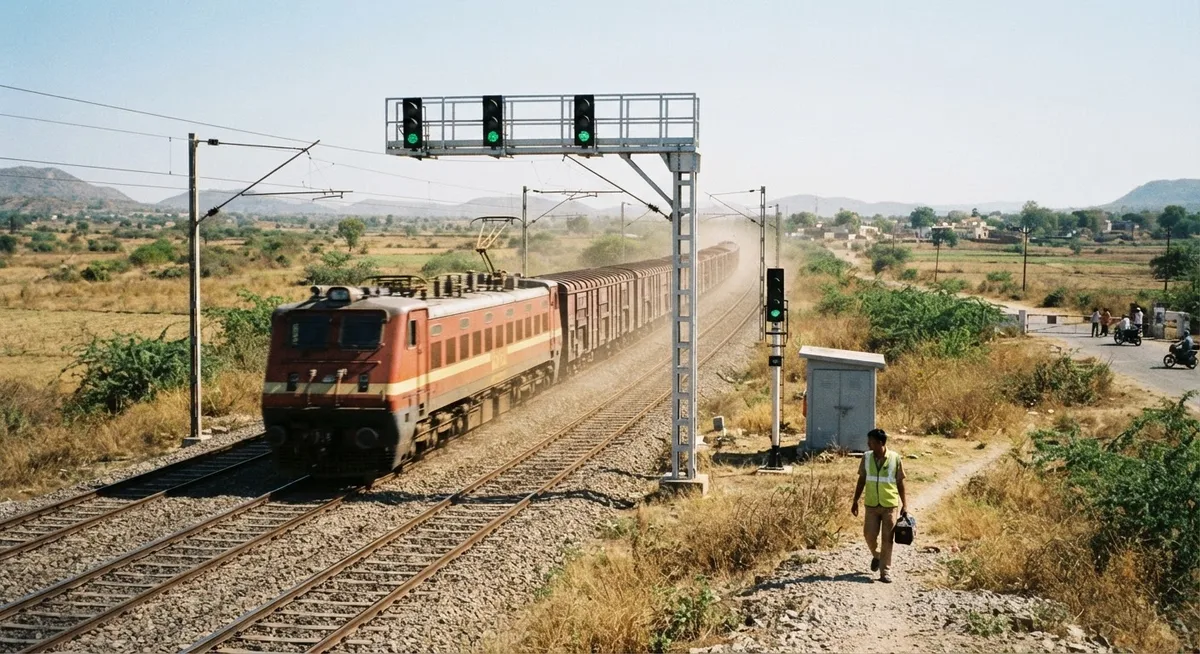
The West Central Railway (WCR) Bhopal Division has reached a major milestone in infrastructure modernization. The Bina Gulabganj automatic signaling system is now officially operational, covering a 64-kilometer stretch that promises to transform train movements in the region.
Boosting Line Capacity and Speed
Commissioned on November 3, 2026, this new Automatic Block Signaling (ABS) system is designed to allow trains to run in much closer succession. This technological leap significantly increases the overall line capacity and ensures much better operational fluidity for the busy corridor.
The upgrade specifically targets the Ganj Basoda–Pabai–Gulabganj segment. To ensure precision and safety, the railway has installed:
- 44 automatic signals
- 204 axle counters (detection points)
Replacing Old Manual Systems
Previously, this section relied on traditional manual absolute block signaling. Under those old rules, a train had to wait for the preceding service to completely clear a block section before it could enter. This often caused unnecessary delays and limited the number of trains that could utilize the tracks at any given time.
By moving away from these manual protocols, the WCR is reducing bottlenecks and making the entire journey smoother for both passengers and freight services.
The 138-km Vision
This 64-km stretch is part of a much larger, ambitious project to modernize the entire 138-kilometer Bina-Bhopal rail section. While the first phase is now active, work continues on the remaining 74-kilometer segment from Gulabganj to Bhopal.
Railway authorities have set a completion target of March 2027 for the entire project, which will provide a fully automated, high-efficiency corridor between Bina and Bhopal.