
















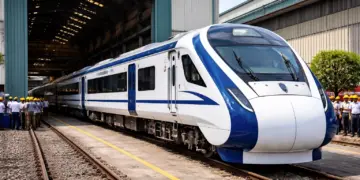
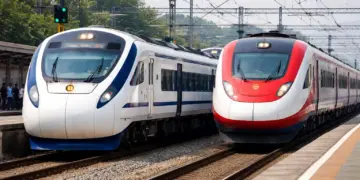



The National High Speed Rail Corporation Ltd (NHSRCL) has officially awarded a major contract for the Mumbai-Ahmedabad High-Speed Rail corridor. A consortium consisting of Siemens Limited, Siemens Mobility GmbH, and DRA Infracon has won the tender for signalling and telecommunications. This decision marks a significant shift as India adopts the European Train Control System (ETCS) Level 2 instead of the originally planned Japanese system.
Why did Siemens win over the L&T-Alstom bid?
The financial aspect played a massive role in this decision. The Siemens-led consortium quoted a total price of approximately ₹4,140.06 crore for the project. In comparison, the rival bid from L&T and Alstom was nearly three times higher at around ₹12,686 crore. The winning contract includes the design, supply, and installation of the signalling system along with a 15-year maintenance agreement. This move ensures that the project remains cost-effective while using world-class technology.
How does the new signalling system benefit India?
India chose the ETCS Level 2 system because it is an open international standard used in over 50 countries. The originally proposed Japanese DS-ATC system is proprietary, which would have restricted India to specific vendors for future repairs and upgrades. By choosing an open standard, India avoids vendor lock-in and ensures better interoperability. This system will also easily integrate with the indigenous high-speed trains currently being manufactured by BEML.
What is the current status of the project?
Construction work on the bullet train corridor is progressing rapidly with several new milestones achieved recently:
- Tunnel Completion: The second mountain tunnel in Palghar, Maharashtra, was completed on February 4, 2026.
- New Corridors: The government has sanctioned seven new high-speed corridors, including the Delhi-Varanasi route, in the latest budget.
- Launch Date: The first section between Surat and Bilimora is confirmed to start operations by August 15, 2027.