Chhattisgarh Connectivity Boost: Taroki-Rowghat Rail Link Passes Safety Test!
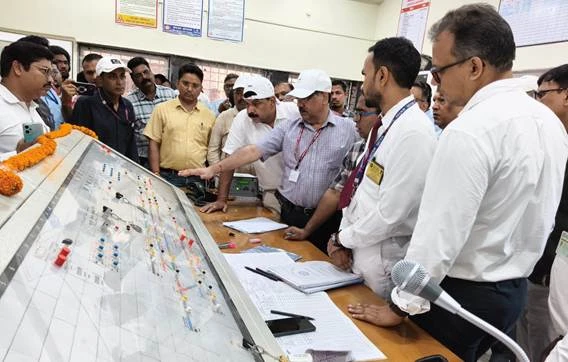
In a major step forward for regional infrastructure, Indian Railways has officially expanded its reach into the Taroki-Rowghat section of South Chhattisgarh. This development marks a critical milestone for the Dallirajhara-Rowghat new rail line, bringing modern transport capabilities to a previously underserved area.
Successful Safety Inspections and Speed Trials
The newly constructed segment, spanning 17.5 kilometers, is a single-electrified broad-gauge track. To ensure the highest standards of safety and operational efficiency, the section underwent a rigorous Commission of Railway Safety (CRS) inspection and speed trial on September 22, 2026. During this process, officials meticulously verified several key components, including:
- Structural integrity of bridges and culverts
- Efficiency of the electrification systems
- Reliability of signaling infrastructure
A Strategic Win for India's Steel Sector
This project is not just about moving passengers; it is a vital artery for the nation's industrial strength. The primary objective of this rail link is to streamline the transportation of iron ore directly to the Bhilai Steel Plant, providing a massive boost to the national steel industry.
The scale of this project reflects intense industrial collaboration. Key highlights include:
- Financial Investment: The Steel Authority of India Limited (SAIL) has contributed approximately ₹1,800 crore toward the construction.
- Project Execution: The work was carried out by Bastar Railway Private Limited (BRPL), a joint venture involving NMDC Limited, SAIL, IRCON International Ltd, and CMDC Limited.
- Administrative Control: The line operates under the Raipur Division of the South East Central Railway (SECR).
Empowering Remote Communities
Beyond its industrial utility, the Taroki-Rowghat extension is set to become a lifeline for the residents of South Chhattisgarh. By establishing stronger rail connections to major hubs like Raipur and Bhilai, the project promises to bridge the gap between remote regions and essential urban services.
The completion of this route through challenging terrain underscores the ongoing commitment to regional economic development and social integration.
Improved access to the following services is expected as a direct result of this new connectivity:
- Healthcare: Faster access to medical facilities and hospitals.
- Education: Easier commutes for students seeking higher learning.
- Employment: Better movement for workers seeking opportunities in industrial zones.
- Trade: Enhanced opportunities for local businesses to reach wider markets.