Delhi HC Demands Railway Online Ticket Audit
The Delhi High Court has ordered the Ministry of Railways and IRCTC to respond to a PIL seeking a railway online ticket audit due to technical concerns.
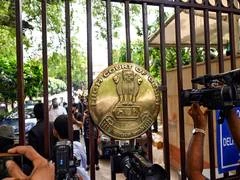
The Delhi High Court has intervened in a legal matter regarding the digital infrastructure of the national carrier. The court has directed the Ministry of Railways and the Indian Railway Catering and Tourism Corporation (IRCTC) to submit their responses to a Public Interest Litigation (PIL) that seeks a railway online ticket audit.
Concerns Over Technical Failures and Unauthorized Access
The petition highlights serious concerns regarding the integrity of the current online reservation system. According to the PIL, there are allegations of frequent technical failures and the potential for unauthorized or unfair access to available train tickets, which could compromise the booking process for the general public.
The High Court's directive comes as part of an ongoing review of systemic accountability and digital safety within the country's transport infrastructure.
Broader Scrutiny of Safety in Delhi-NCR
This legal movement occurs alongside heightened judicial focus on public safety within the national capital region. In a separate but significant development, the Supreme Court of India recently took suo motu cognizance of the rising crime rates against women and minors in the Delhi-NCR area.
A division bench, including Justices J.B. Pardiwala and K. Vinod Chandran, has mandated that authorities submit detailed status reports within four weeks. These reports are expected to address critical safety improvements, including:
- Enhanced lighting in public areas
- Increased CCTV surveillance coverage
- Improved patrol mechanisms to ensure security
To assist in these proceedings, the Supreme Court has appointed Senior Counsel Liz Mathew as Amicus Curiae, with the next hearing scheduled for October 5, 2026.
Safety Initiatives and Public Mobility
The discourse on safety has also reached the political sphere. Speaking at the diamond jubilee function of Maitreyi College on September 30, 2026, Delhi Chief Minister Rekha Gupta emphasized that safety efforts should prioritize behavioral shifts. She argued that initiatives should focus on creating a safer environment rather than placing restrictions on the mobility of