Delhi-Lucknow Bullet Train: PM Modi Approves Northern Corridor
PM Modi approves the 1,500km Northern Bullet Train Corridor connecting Delhi to Lucknow, Varanasi, and Patna, slashing travel times significantly.
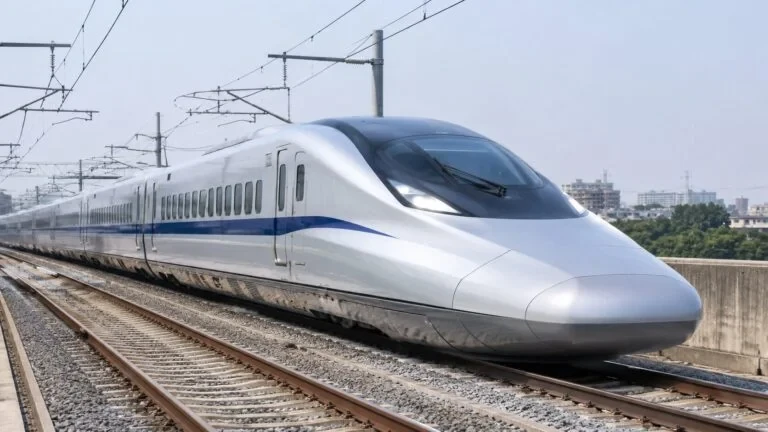
In a massive boost to India's infrastructure, Prime Minister Narendra Modi has officially approved the Northern Corridor of the nation's high-speed bullet train network. This landmark decision promises to revolutionize travel across North and East India, connecting major urban hubs with unprecedented speed and efficiency.
Connecting the Heart of India
Announced by Union Railway Minister Ashwini Vaishnaw on October 31, 2026, this extensive 1,500-kilometer high-speed rail project is set to bridge the gap between the national capital and several key cities. The corridor will serve a massive passenger base by linking New Delhi with Agra, Kanpur, Lucknow, Ayodhya, Varanasi, Prayagraj, Patna, Siliguri, and Guwahati.
Drastic Reduction in Travel Time
The most significant impact of this project will be felt by commuters traveling between Delhi and Lucknow. Currently, the journey takes approximately seven hours via conventional rail services. However, once the bullet train service is operational, the travel time is projected to plummet to just 2 hours and 12 minutes.
- Current Travel Time (Delhi-Lucknow): Approximately 7 hours
- Projected Bullet Train Time: Approximately 2 hours 12 minutes
- Total Corridor Length: 1,500 Kilometers
A 'Make in India' Initiative
The National High Speed Rail Corporation Limited (NHSRCL) has already submitted the Detailed Project Report (DPR) to the Ministry of Railways. Emphasizing the spirit of self-reliance, Railway Minister Vaishnaw highlighted that the entire project will be executed under the 'Make in India' framework.
This means the corridor will be built using the expertise of local engineers and the hard work of domestic laborers, fostering growth within the Indian engineering and construction sectors. Furthermore, the government aims to keep the fare structures economical, ensuring that the bullet train serves as a cost-effective and high-speed alternative to air travel.
While the approval marks a historic milestone, officials have noted that a specific commencement date or an operational launch schedule for the Delhi-Lucknow section has not yet been finalized. However, the momentum for this high-speed revolution is clearly building.