










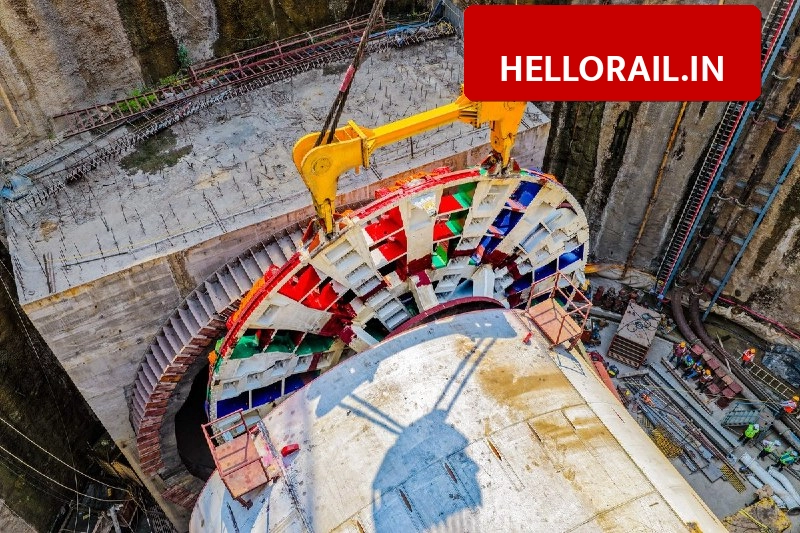

The Ministry of Railways and National High Speed Rail Corporation Limited (NHSRCL) reached a new milestone in the Mumbai-Ahmedabad High-Speed Rail (MAHSR) project. A 350-tonne cutterhead for the second Tunnel Boring Machine (TBM) was lowered at Sawli (Ghansoli) near Mumbai on May 23, 2026. This machine will help build the 21 km underground part of the corridor.
What are the details of these massive TBMs?
These machines are the largest ever used for rail tunnels in India. Each TBM weighs over 3,000 tonnes and has a cutterhead diameter of 13.6 meters. They are designed to dig a single large tunnel that can fit both the up and down lines of the bullet train. The machines are manufactured by German company Herrenknecht AG and assembled by Afcons Infrastructure.
How will the tunnelling process work?
The project involves two main TBMs working in different sections of the underground corridor. The first TBM was lowered at Vikhroli on May 17, 2026, and will dig about 6 km towards the Bandra Kurla Complex (BKC). The second TBM will start from Sawli (Ghansoli) and move towards Vikhroli. This work includes building India’s first 7 km undersea rail tunnel under Thane Creek.
Key technical specifications of the TBM
| Feature | Specification |
|---|---|
| Cutterhead Weight | 350 Tonnes |
| Total Machine Weight | Over 3,000 Tonnes |
| Cutterhead Diameter | 13.6 Meters |
| Cutter Discs | 84 |
| Scrapers | 124 |
| Bucket Lips | 16 |
Frequently Asked Questions (FAQs)
When will the actual tunnelling start?
The TBMs are currently undergoing final assembly and commissioning trials. Initial tunnelling drives are expected to begin in the first week of July 2026.
What is special about the 21 km underground section?
This section is critical as it includes India’s first 7 km undersea rail tunnel beneath Thane Creek and passes under densely populated areas and the Mithi river.