


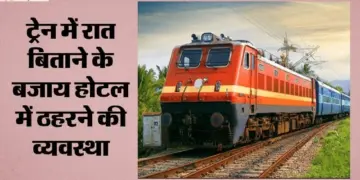

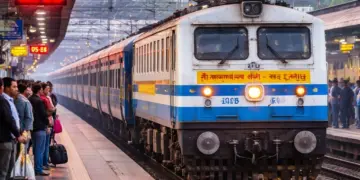

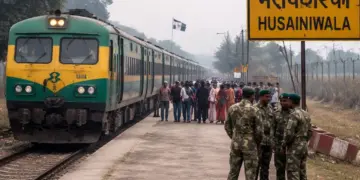
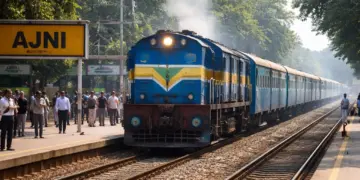









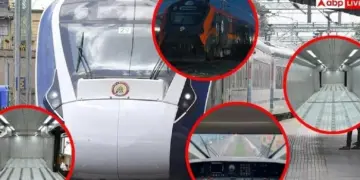
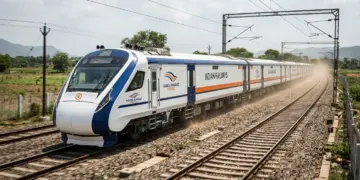




Indian Railways is introducing a new Dynamic Halt Policy to make train travel faster and more efficient. Under this system, Artificial Intelligence (AI) will analyze booking data to decide where a train should stop and where it can skip. This move aims to replace political decisions with a commercial approach to reduce travel time for passengers.
How will AI decide the train stops?
The Railway Board will use an AI-based algorithm to study booking patterns from the last 180 days. If a station has less than 5% booking, the stop may be removed. Specifically, stations with zero bookings between 12 AM and 4 AM will be prioritized for removal. On the other hand, if a small station shows more than 25% demand, a new stop may be added for superfast trains.
What are the benefits and affected routes?
Removing unnecessary stops will save passengers between 30 minutes to 2 hours of travel time. The railways will also save approximately ₹18,000 to ₹20,000 for every stop eliminated. This policy is expected to start on busy routes connecting Delhi to Bihar, Odisha, and West Bengal. To ensure local connectivity, the Railway Board may increase the number of MEMU and passenger trains in these areas.
| Criteria | Action |
|---|---|
| Booking less than 5% | Stop may be removed |
| Zero booking (12 AM – 4 AM) | High priority for removal |
| Booking more than 25% | New stop may be added |
| Estimated Time Saving | 30 minutes to 2 hours |
| Cost Saving per Stop | ₹18,000 to ₹20,000 |
Frequently Asked Questions (FAQs)
Which routes will be affected by the Dynamic Halt Policy?
The policy is expected to be implemented initially on busy sections covering routes from Delhi to Bihar, Odisha, and West Bengal.
Will local connectivity be affected if stops are removed?
While mail and express train stops may decrease at small stations, Indian Railways plans to increase MEMU and passenger shuttle services to maintain connectivity.