Farrukhnagar-Loharu Rail Corridor: Survey Done, New Route Set!
The Farrukhnagar-Loharu Rail Corridor survey is finished. The new route will link Jhajjar and Dadri to Gurugram and Delhi.
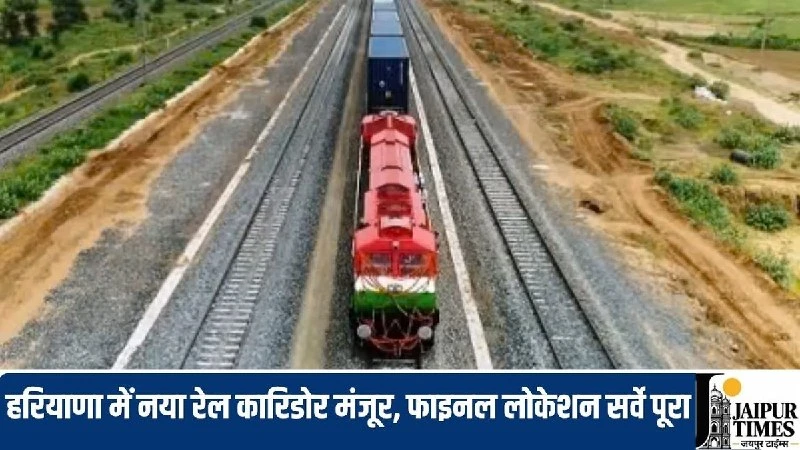
The dream of a new rail link in Haryana is moving rapidly toward reality. The Farrukhnagar-Loharu Rail Corridor has reached a major milestone with the successful completion of its Final Location Survey (FLS), paving the way for enhanced connectivity in the region.
The Planned Route and Ground Survey Progress
This project, which forms a vital part of the Haryana Economic Rail Corridor, is designed to create a seamless link between several key areas. The proposed route is set to connect:
- Garhi Harsaru
- Farrukhnagar
- Jhajjar
- Dadri
- Loharu
To finalize the precise path of the tracks, specialized machinery was deployed for ground-level marking, a process known as 'nishan-dehi'. This essential work has already been carried out in various villages, including Nihalgarh, Berla, and Kanhara, ensuring the route is accurately mapped.
Land Acquisition and Farmer Compensation
With the survey phase concluded, the project is now transitioning into the land acquisition stage. The railway department is working in close coordination with the local administration to manage this process. To ensure a smooth transition, affected farmers will receive compensation in strict accordance with the official land acquisition policies of the Haryana government.
Executing the Vision: HRIDC's Role
The development is being managed by the Haryana Rail Infrastructure Development Corporation (HRIDC). This organization operates as a joint venture between the Ministry of Railways and the Government of Haryana, combining central resources with state-level execution expertise.
At this stage, technical teams are focused on several critical tasks, including:
- Finalizing the Detailed Project Report (DPR).
- Calculating the total estimated construction costs.
- Assessing the Rate of Return (RoR) to ensure economic viability.
Boosting Connectivity for South Haryana
Once the corridor becomes operational, it will serve as a lifeline for the towns and villages of South Haryana. By providing a direct link to Gurugram and Delhi, the project is expected to transform regional travel and trade.
Beyond local benefits, the corridor holds significant long-term strategic value. There are plans to integrate this route into the broader national rail network, which could eventually provide critical connectivity to the major ports in Gujarat, boosting industrial and commercial movement across the country.