Indian Railways operates its first double stack long haul container train from JNPT to Vadodara
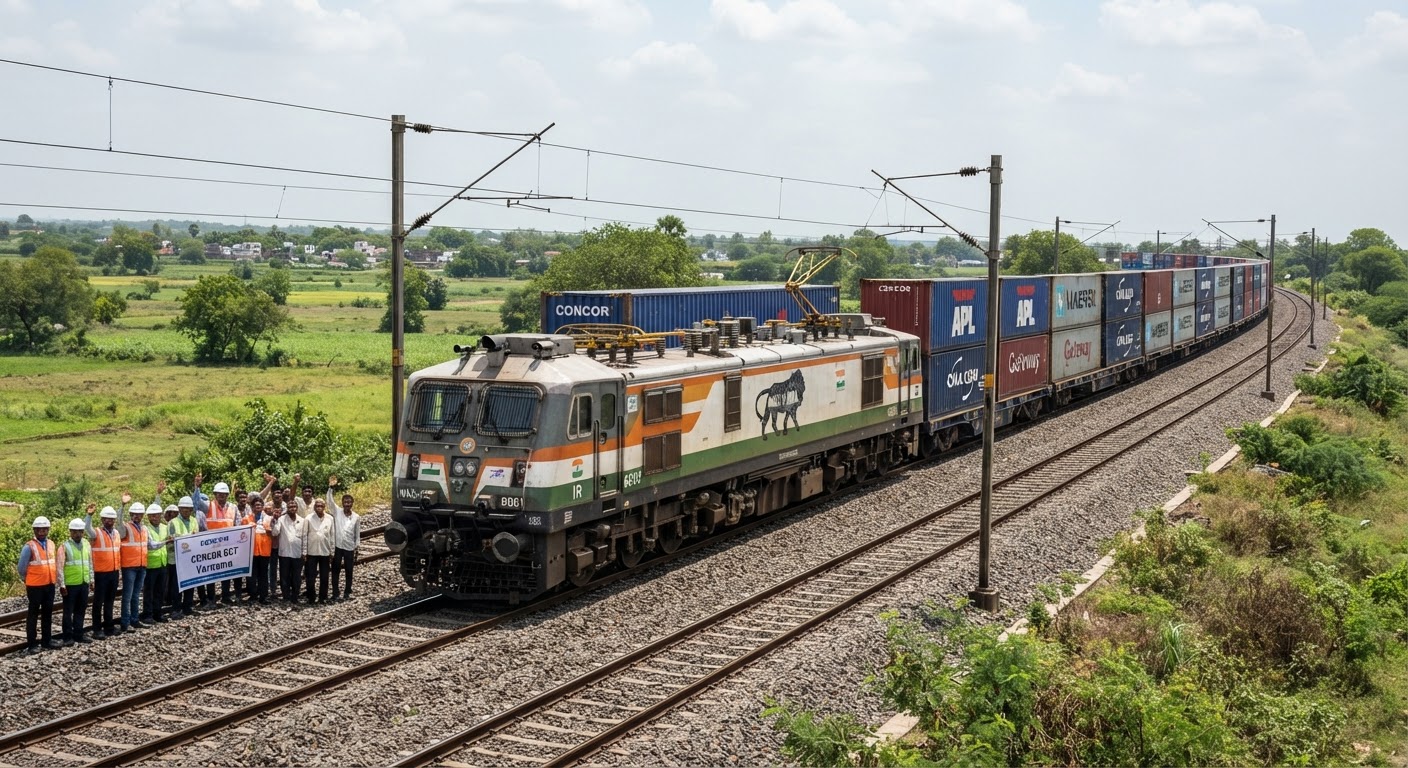
Indian Railways recently achieved a major milestone in freight transportation by successfully running its first-ever double-stack long-haul container train from the Jawaharlal Nehru Port to the CONCOR GCT terminal in Varnama, Vadodara. This milestone run covers a distance of approximately 422 kilometers along the Western Dedicated Freight Corridor and successfully transports a massive total of 360 TEUs of cargo. Union Railway Minister Ashwini Vaishnaw shared this achievement online, noting it as clear proof of the rapidly expanding freight capabilities of Indian Railways.
The landmark freight service commenced on August 21, 2026, at 7:00 PM, utilizing a specialized long-haul formation of two double-stack rakes coupled together. The leading rake was hauled by locomotive 60311, carrying 46 containers with a total weight of 1,817 tons. Meanwhile, the trailing rake was pulled by locomotive 24690, carrying another 46 containers weighing 2,105 tons. This tightly coordinated movement highlights the true operational power and capacity of the Western Dedicated Freight Corridor in managing high-volume containerized freight in just a single transit.
Benefits for Logistics and Environment
Railway officials have confirmed that this dedicated service is specifically designed to accelerate the evacuation of containers directly from JNPT. The new service will drastically reduce terminal congestion and optimize the seamless movement of goods between major maritime ports and inland terminals. By relying heavily on modern electric traction for these heavy, long-haul formations, Indian Railways continues to make great strides in building truly green freight corridors across the nation.
Ultimately, this massive operational shift aims to decrease our heavy reliance on traditional road transport for long-distance cargo movement. This reduction in road traffic will effectively lower national logistics costs, conserve precious fuel, and significantly shrink the overall carbon footprint of India's expanding freight rail network.