Kalka-Shimla Route to Get Hydrogen-Powered Trains
Indian Railways plans to introduce hydrogen-powered trains on the Kalka-Shimla route to protect the Shivalik hills.
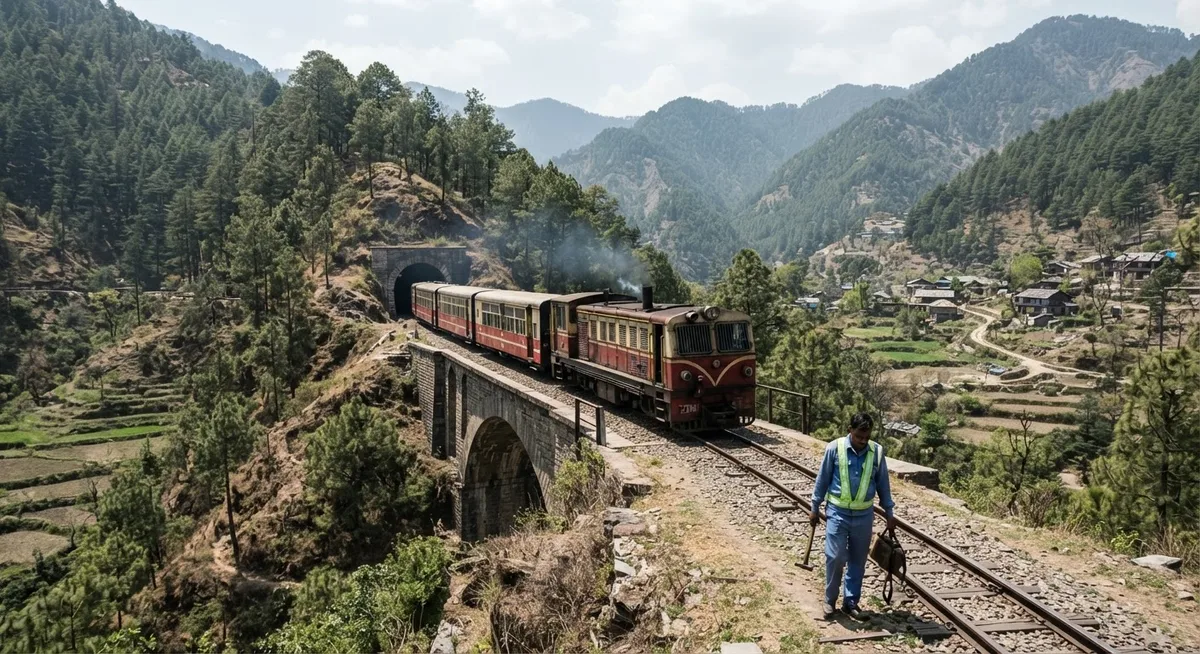
The historic Kalka-Shimla narrow-gauge railway is set for a major environmental upgrade. Under the government's 'Hydrogen for Heritage' initiative, the Ministry of Railways is moving forward with plans to introduce hydrogen-powered trains on this iconic route.
A Green Shift for the Shivalik Hills
The transition aims to replace conventional diesel locomotives with eco-friendly fuel-cell technology. This move is specifically designed to preserve the ecologically sensitive Shivalik hills. A significant advantage of this new propulsion system is that its only byproduct is water, ensuring minimal impact on the surrounding environment.
Engineering Challenges and Feasibility
Northern Railway has confirmed the successful completion of a comprehensive feasibility survey for the route. Given the age and complexity of the 120-year-old network, the project faces unique engineering challenges, including:
- Navigating over 103 tunnels
- Crossing more than 900 bridges
- Managing the steep and rugged mountainous terrain
Hydrogen Production at Barog Station
To support the new technology, authorities have officially selected Barog railway station as the location for a dedicated hydrogen fuel production plant. This facility will be essential for fueling the hydrogen-powered fleet.
The project was formally included in the Railways' 2024–25 budget and planning cycle. It follows discussions between Himachal Pradesh Chief Minister Sukhvinder Singh Sukhu and Union Railway Minister Ashwini Vaishnaw to advance the modernization of this UNESCO-recognized rail network.
Northern Railway has indicated that trial runs will commence only after all technical and administrative formalities are completed. Final implementation is subject to detailed technical feasibility assessments and regulatory approvals.