India's First Bullet Train Trial: May 2027 Start!
India prepares for its first bullet train trial on the Surat-Bilimora section in May 2027, with passenger services expected later that year.
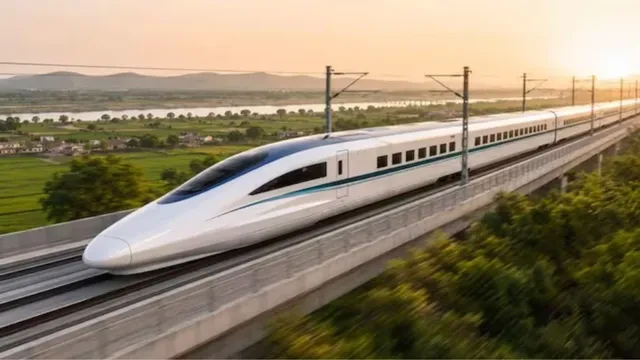
India is on the brink of a massive transportation revolution. The nation is preparing for its very first high-speed bullet train trial, scheduled to take place in May 2027. This historic milestone will occur on the 50-kilometer Surat to Bilimora section, marking a giant leap toward making high-speed rail a reality for Indian commuters.
Milestone Achieved: Electrification Complete
Railway Minister Ashwini Vaishnaw officially confirmed the development, noting that the electrification work for the Surat-Bilimora segment has been successfully completed. This critical infrastructure step paves the way for the upcoming trials. The overhead electric equipment for this specific stretch was officially commissioned on November 20, signaling that the tracks are ready for high-voltage operations.
When Can Passengers Board?
While the trials are set for May 2027, passengers won't have to wait too long. Following the trial phase, the first official passenger service is expected to launch in the final quarter of 2027. Here is the projected timeline for the Mumbai-Ahmedabad High Speed Rail project:
- January 2027: Completion of signaling works.
- May 2027: Commencement of the first trial run on the Surat to Bilimora stretch.
- End of 2027: Readiness of the section extending from Ahmedabad to Vapi.
- By 2029: Expected service connectivity extending as far as Thane.
The Beast Behind the Speed: The B 28 Train Set
To ensure a world-class experience, the trials will utilize the advanced B 28 train set. This high-tech model is engineered to reach a maximum speed of 280 kilometers per hour.
Safety has been a top priority during the design phase. The B 28 has already undergone rigorous testing to ensure it can withstand the intense air pressure changes experienced at high speeds. Minister Vaishnaw emphasized that both the train units and the supporting infrastructure have been specifically built to account for these aerodynamic challenges during transit.
Advanced Engineering and Environmental Care
Building a high-speed corridor requires much more than just standard tracks. The project involves complex technical standards to maintain stability at speeds exceeding 240 km/h. Key engineering feats include:
- Noise Mitigation: Approximately 94,000 noise barriers have been installed in residential zones surrounding the track to minimize disturbances to local communities.
- Power Management: 14 specialized traction sub-stations have been integrated to manage electricity distribution effectively across the 508-kilometer corridor.
- Undersea Engineering: Construction teams are currently working at a rapid pace on a massive undersea tunnel within the Maharashtra portion of the route.
Once the full route is operational, the impact on travel will be transformative. It is estimated that the journey will take approximately one hour and fifty-eight minutes, drastically reducing travel time between major hubs.