India TBM Manufacturing: A Giant Leap for Self-Reliance
India accelerates domestic TBM production to reduce imports, especially after China announces export controls on critical tunneling technology.
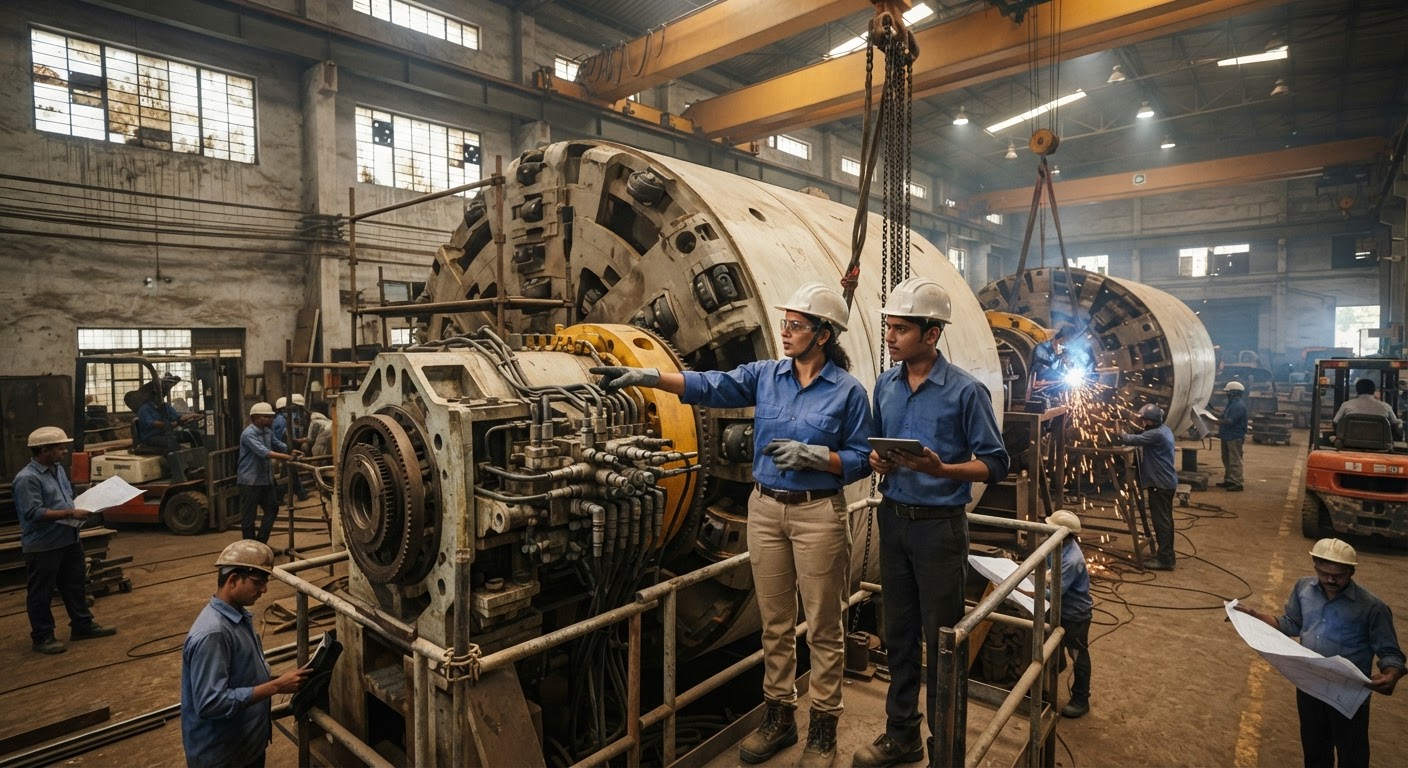
The landscape of India TBM manufacturing is undergoing a massive transformation as the nation moves toward complete self-reliance in critical infrastructure technology. As part of the broader 'Aatmanirbhar Bharat' and 'Make in India' initiatives, the country is rapidly building a domestic ecosystem for the design, production, and maintenance of Tunnel Boring Machines (TBMs).
Breaking the Diameter Barrier
For a long time, India's tunneling capabilities were limited by a dependency on international imports, typically relying on machines with diameters ranging from 8 to 15 meters. However, Union Minister for Railways Ashwini Vaishnaw announced on October 23, 2026, that this technical dependency is shifting. India is now capable of manufacturing indigenous TBMs that exceed 16 meters in diameter.
This advancement is vital for navigating the complex geological conditions found in major national projects. A prime example is the Rishikesh-Karnaprayag rail line, which requires specialized engineering and high-capacity machines to tunnel through the challenging Himalayan terrain.
The Strategic Urgency of Indigenization
The drive to secure domestic supply chains has been accelerated by global geopolitical shifts. China, which currently commands approximately 70% of the global TBM market, announced on October 19, 2026, that it will implement export controls on TBMs effective November 18, 2026.
These impending restrictions have heightened the urgency for India to secure its own manufacturing capabilities, particularly to ensure that high-priority projects, such as the Mumbai-Ahmedabad Bullet Train corridor, remain on schedule without being vulnerable to international trade fluctuations.
Economic Incentives and Industry Growth
To catalyze this industrial evolution, the 2026-27 Union Budget introduced a $1.2 billion incentive scheme aimed at high-value infrastructure equipment. This strategic move is expected to attract $1.8 billion in new investments over the next seven years.
Domestic industrial giants are already playing pivotal roles in this transition:
- BEML and Larsen & Toubro (L&T) are central players in the domestic manufacturing push.
- Global collaborations are also being localized; for instance, Herrenknecht has manufactured 10 TBMs for the Chennai Metro Phase 2, with 60% of the components being sourced from Indian suppliers.