Indian Railways Bike Transport: Essential Rules & Guide
Planning to move your bike by train? Learn the essential Indian Railways bike transport rules, documentation, and the strict zero petrol policy.
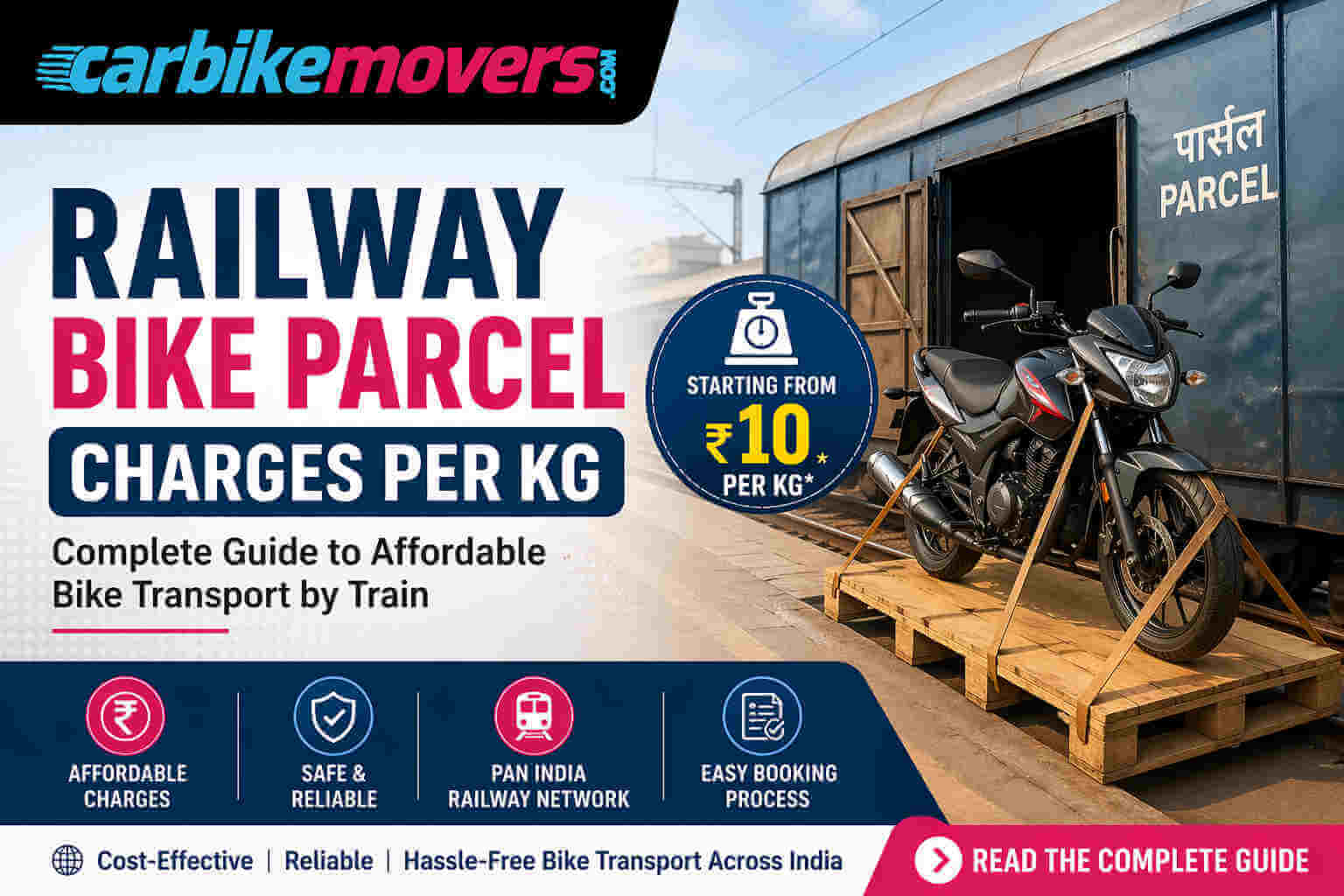
If you are planning to relocate your two-wheeler, using Indian Railways bike transport services is a reliable and cost-effective option. However, moving a vehicle via rail is not as simple as carrying a suitcase; it involves specific protocols regarding documentation, safety, and booking timelines that every rider must follow to avoid heavy penalties.
Luggage vs. Parcel: Which Method Should You Use?
Indian Railways categorizes bike transportation into two distinct methods based on whether the owner is traveling alongside the vehicle:
- Luggage: This service is intended for passengers who are traveling on the same train as their bike.
- Parcel: This method is used for shipments where the bike travels unaccompanied by the owner.
Mandatory Documentation Checklist
To ensure a seamless booking process and avoid rejection at the station, you must prepare the following documents:
- Registration Certificate (RC): Both the original and a photocopy are mandatory.
- Identity Proof: A valid government-issued photo ID, such as an Aadhaar card, Driving License, Passport, or Voter ID.
- Insurance: Active bike insurance papers must be presented.
- Receiver Details: Complete contact information for the person collecting the bike at the destination.
- Authorization Letter: If the bike is not registered in your name, you must provide an authorization letter from the owner along with a copy of their ID.
- Confirmed Ticket: For those using the luggage service, a confirmed train ticket is required.
The Strict 'Zero Petrol' Safety Policy
Safety is the highest priority for the railways, and they enforce a very strict 'Zero Petrol' policy. Before booking your transport, you must ensure that the fuel tank is completely emptied.
Failure to comply with the zero-petrol rule can result in significant consequences. Officials conduct both manual and ignition checks to verify compliance. If fuel is detected, you may face fines ranging from ₹1,000 to ₹5,000 and potential legal action under Section 164 of the Railways Act, 1989.
Booking Procedures and Logistics
Properly packing and timing your booking is essential for the safety of your vehicle and to ensure it reaches its destination on time. Your bike should be professionally packed and clearly labeled with the origin station, destination station, and contact details for both the sender and receiver.
Timing Your Arrival
The logistics for booking vary depending on the service you choose:
- For Luggage: It is advised to initiate the booking one to two days before your journey. You should bring your vehicle to the luggage office at least 30 to 60 minutes before the train's departure, though in some cases, you may need to arrive up to four hours early.
- For Parcel: You can make bookings one to two days in advance during standard office hours. Alternatively, for long-term planning, parcel bookings can be made up to 120 days in advance through the official Indian Railways portal.
Upon successful booking, you will be issued a Parcel Way Bill (PWB) or a Railway Receipt, which is the only document that will allow you to collect your bike at the destination station.
Costs, Insurance, and Collection
The total cost of transport is calculated based on three main factors: the engine capacity of your bike, the total distance traveled, and the type of train service (for example, Premier or Rajdhani services may have different scales). For added security, you can opt for optional insurance coverage, which typically costs 1% of the self-declared value of your bike.
Once your bike arrives at the destination, you must collect it promptly. While stations provide a free storage period ranging from 6 to 18 hours (depending on the station category), any delay will result in demurrage charges, which are generally billed at a rate of ₹10 per hour. Generally, you can expect the delivery process to take anywhere from 1-2 days to 3-7 working days.