Indian Railways Considers Extending Hydrogen Train Route to Delhi to Boost Ridership
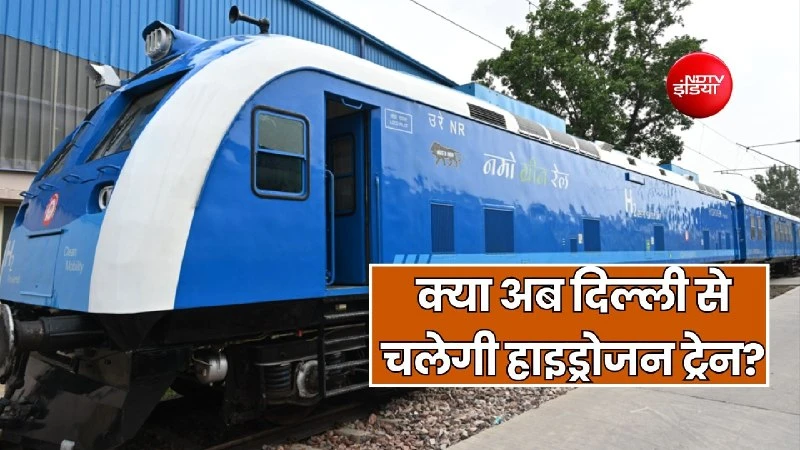
Indian Railways is actively evaluating the possibility of extending the operations of the country’s first indigenous hydrogen-powered train from its current route to Azadpur station in Delhi in an effort to improve passenger numbers. The pioneering eco-friendly service was launched on July 17, 2026, but has faced challenges in attracting commuters along its initial corridor. Railways officials and technical experts are currently reviewing operational data and conducting assessments to determine if the route expansion is feasible. Here are the key highlights of the ongoing review and current status of India's hydrogen train project:
- The hydrogen train currently operates on the 89-kilometer Jind-Sonipat section.
- Passenger turnout has been notably low, with only 40 to 60 commuters daily against a designed capacity of approximately 2,600 passengers.
- Service frequency has been reduced to one round trip per day instead of the initially planned two trips due to poor ridership.
- The train has a driving range of 250 to 300 kilometers on a single tank, making the 130-kilometer distance to Delhi technically achievable.
- Refueling infrastructure for the hydrogen train is currently restricted solely to Jind.
Evaluating the Delhi Extension
Since its debut, the indigenous hydrogen train has struggled to draw significant crowds on the Jind-Sonipat section. The train currently carries only 40 to 60 commuters daily against a design capacity of approximately 2,600 passengers. Because of this extremely low ridership, railway authorities had to scale back operations, limiting the service to just one round trip per day instead of the originally planned two trips.
To address this challenge, Northern Railways officials confirm that a dedicated team of experts is conducting trial runs and closely monitoring operations to assess the viability of extending the route to Azadpur station in Delhi. Officials note that the train is technically capable of covering the 130-kilometer distance to the national capital as it can travel between 250 and 300 kilometers on a single tank. However, a major operational hurdle remains the fact that refueling facilities are currently restricted only to Jind.
Green Goals and Alternative Commuter Proposals
This hydrogen train project is a vital component of the National Green Hydrogen Mission and supports India's ambitious net-zero carbon emission goals. The train's design approval and technical specifications were successfully developed by the Research, Design and Standards Organisation (RDSO). While railway authorities emphasize that passenger safety remains the primary factor in any route expansion decision, local commuters have stepped forward with alternative suggestions.
Passengers and local stakeholders have suggested extending the service to include Panipat and Safidon instead of Delhi. This alternative would create a functional circuit connecting key industrial hubs in Haryana, which locals believe could significantly improve daily ridership if the Delhi extension proves too difficult to manage operationally. Railway authorities continue to weigh all options to ensure the long-term success of India's green railway initiative.