Indian Railways' DFC: Boosting Speed and Passenger Punctuality
Discover how Dedicated Freight Corridors (DFC) are boosting freight speed and passenger train punctuality across the Indian Railways network.
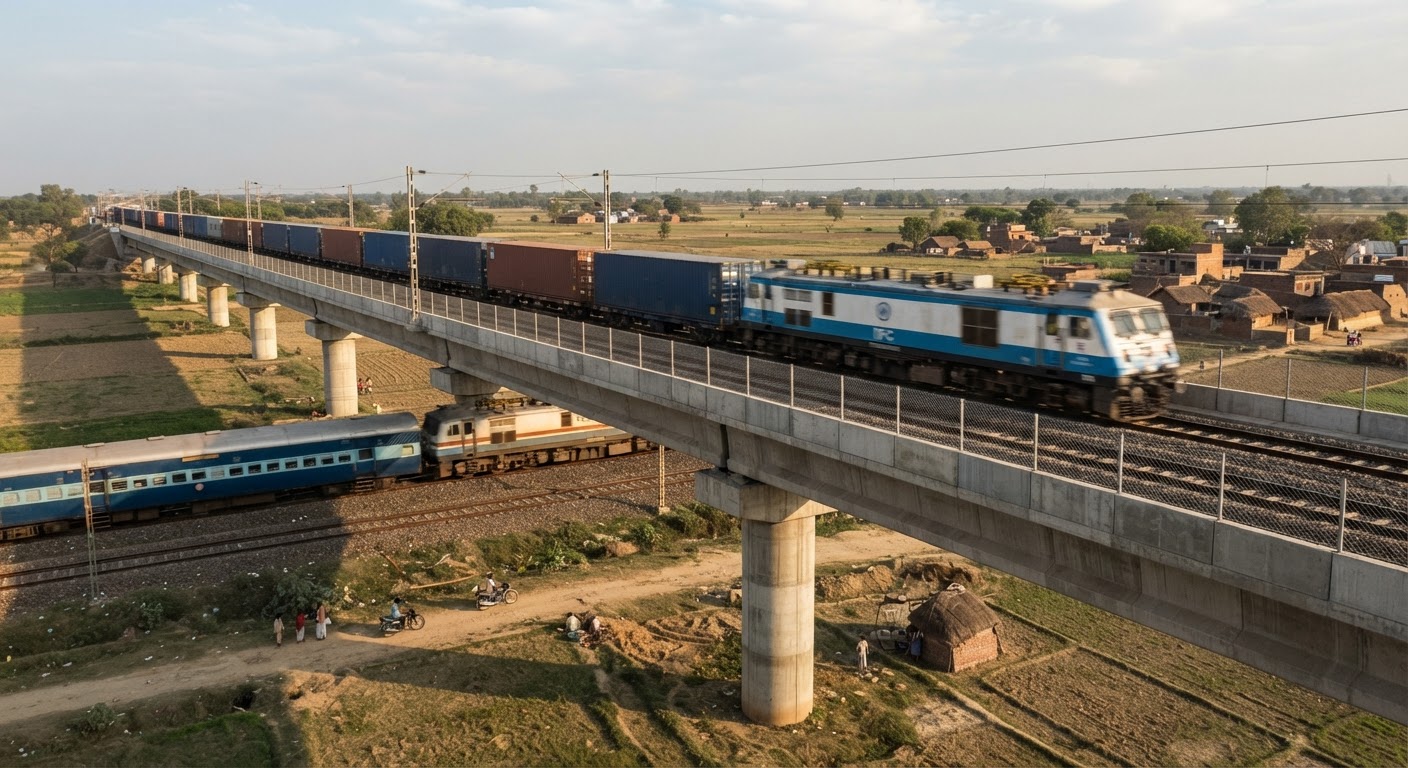
Indian Railways is undergoing a massive strategic shift with the development of Dedicated Freight Corridors (DFC). This initiative is designed to revolutionize how goods are moved across the country while simultaneously improving the experience for millions of daily commuters.
Solving the Congestion Crisis
Traditionally, the Indian rail network has operated on a shared model where passenger trains and freight trains utilize the same tracks. This creates immense pressure on the infrastructure, often leading to significant bottlenecks. The DFC addresses this by creating separate rail corridors specifically for freight movement. This separation provides two major benefits:
- Relief for Passenger Services: By removing heavy freight from main lines, passenger trains can maintain much better punctuality and speed.
- Efficient Freight Movement: Goods trains no longer have to wait for passenger train slots, allowing for much smoother and more predictable operations.
Increased Speed and Heavy-Duty Capacity
The engineering behind the DFC allows for capabilities that standard tracks cannot support. These corridors are built to accommodate heavier and longer freight trains, which significantly increases the total volume of cargo that can be transported in a single journey. This leads to:
- Faster delivery times for essential commodities.
- Reduced operational delays within the network.
- A massive increase in the overall capacity to move goods.
Driving National Economic Development
The impact of the DFC extends far beyond the railway tracks. By providing high-speed, high-capacity connectivity to major industries, ports, and trade hubs, the project acts as a vital catalyst for economic growth. The streamlined logistics process is expected to reduce fuel consumption and lower overall logistics costs for businesses, making the movement of goods more reliable and cost-effective for the entire national economy.