Indian Railways is upgrading infrastructure to cut Delhi Mumbai travel time
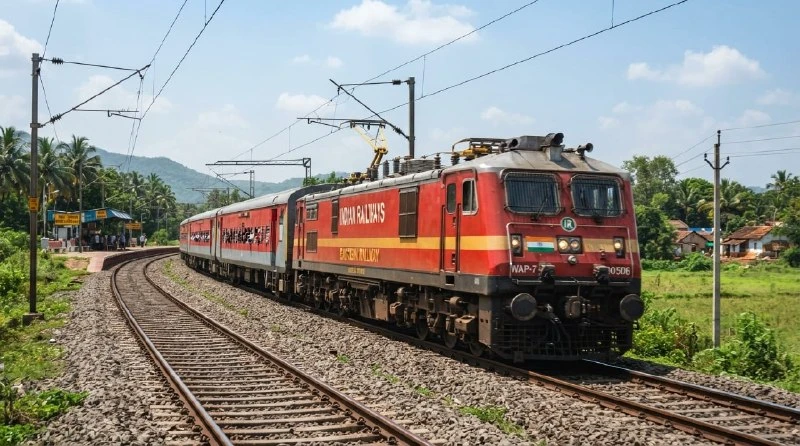
Indian Railways is advancing a series of infrastructure projects designed to significantly reduce travel time between Delhi and Mumbai. Central to these efforts is the Western Railway's construction of third and fourth railway lines along a 259-kilometer stretch between Vadodara and Ratlam. This critical expansion aims to increase operational capacity, safety, and punctuality across the Delhi-Mumbai network.
Additional infrastructure work includes the doubling of the 33-kilometer Vishwamitri-Dabhoi line, a project representing an investment of Rs 394 crore that will enhance rail fluidity and connectivity to the Statue of Unity. On August 31, 2026, Railway Minister Ashwini Vaishnaw announced plans to add four tracks to seven high-density corridors, including the Mumbai-Delhi route, to manage growing passenger and freight volumes.
Speed Upgrades and Modern Trains
Western Railway General Manager Ramashray Pandey noted on June 24, 2026, that efforts are underway to increase maximum permissible speeds to 130 kmph on several routes, with specific work focused on enabling trains to reach speeds of 160 kmph on the Mumbai-Delhi trunk route. Complementing these infrastructure upgrades is the development of modern rolling stock, including Vande Bharat sleeper trains by manufacturers such as BEML, Integral Coach Factory, Kinet Railway Solutions, and Titagarh-BHEL.
Furthermore, on September 6, 2026, Member of Parliament Anil Firojiya met with Railway Board Chairman and CEO Satish Kumar to propose the introduction of Vande Bharat sleeper service on the Ujjain-Indore to Delhi-Mumbai corridor ahead of the 2028 Simhastha event. During the same briefing, Chairman Satish Kumar confirmed that Indian Railways is targeting an operational speed of 110 km/h for the nation's inaugural hydrogen-powered train, which has already successfully completed trial runs reaching 120 km/h.