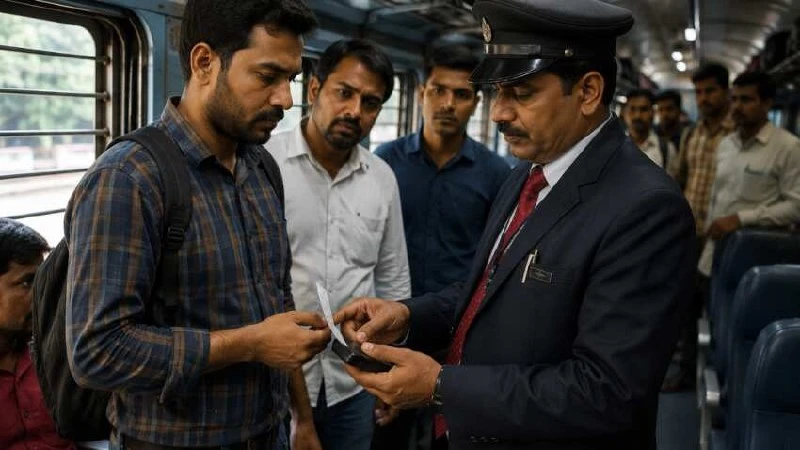
Indian Railways has implemented stricter measures for passengers following the revision of Sections 137 and 138 of the Railway Act, 1989 under the Jan Vishwas Amendment of Provisions Act, 2026. These updated regulations aim to curb unauthorized travel, improve station cleanliness, and enhance passenger safety across all routes. Passengers must now be extra cautious while traveling, as fines for various railway offences have seen a substantial hike effective since late June and early July 2026. Key updates include the doubling of the minimum ticketless travel fine to ₹500, strict enforcement against unauthorized entry into women-reserved coaches with a ₹2,500 penalty, and the complete ban on digital ticket screenshots starting September 2, 2026.
The minimum fine for traveling without a valid ticket has been officially doubled
from ₹250 to ₹500, which must be paid alongside the applicable fare when caught by ticket-checking staff. Central Railway has aggressively enforced these rules, with its Mumbai Division reporting a
70 percent increase in penalty collection between June 21 and July 16, 2026. Similarly, the South East Central Railway collected over
₹4.19 crore in fines during special checking drives in August 2026. The updated penalty structure also addresses other commuter violations. Unauthorized entry into women-reserved coaches now attracts a fine of
₹2,500. Smoking in prohibited railway areas and unauthorized hawking are each punishable by a
₹2,000 fine. Cleanliness-related violations can incur on-the-spot fines of up to
₹1,000, which may increase to
₹2,000 if taken to court. Passengers creating a drunken nuisance face either
24 hours of imprisonment or a
₹1,000 fine. Furthermore, transferring or using another person's ticket results in ticket confiscation and a
minimum fine of ₹500.
In another major update effective September 2, 2026, Indian Railways has officially declared that
digital screenshots of train tickets are no longer valid proof of travel. Commuters must display their tickets directly from the official booking mobile application. Additionally, passengers are required to keep their mobile devices powered on with sufficient battery life to facilitate smooth ticket verification by traveling ticket examiners and railway officials.