Indian Railways Upgrades Signaling: Massive Electronic Interlocking Push
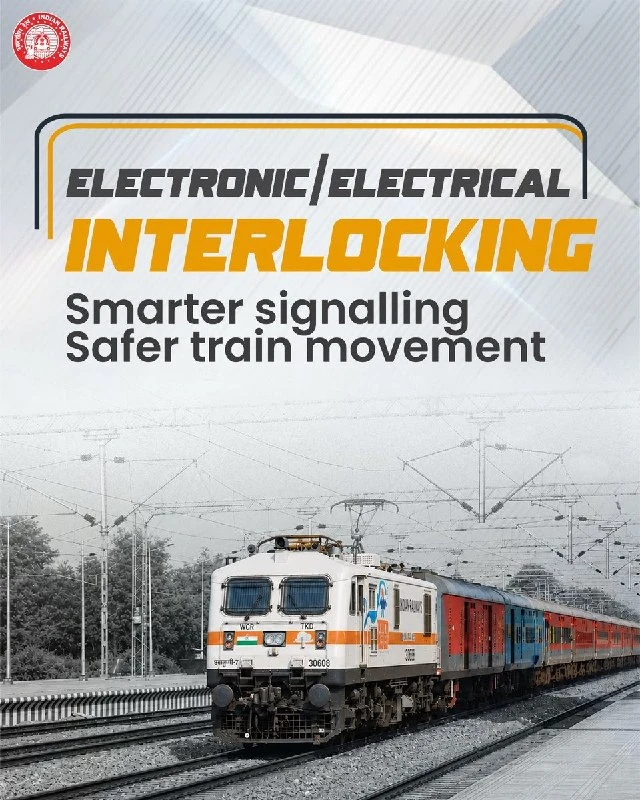
The Ministry of Railways is undergoing a massive technological overhaul to ensure safer and more reliable journeys across the country. By integrating Electronic Interlocking (EI) systems, the national rail network is moving away from outdated signaling methods to embrace a modern, high-tech era of train operations.
This strategic shift involves replacing aging relay-based systems, including Panel Interlocking (PI) and Route Relay Interlocking (RRI), with advanced Electronic Interlocking. This modernization is crucial not only for operational efficiency but also to provide the necessary infrastructure for the indigenous Kavach automatic train protection system.
Multi-Crore Projects Across Major Divisions
The Ministry has sanctioned several large-scale projects across various railway divisions to implement this technology. These investments aim to enhance safety, improve punctuality, and increase the total line capacity on High Density (HDN) and Highly Utilised Network (HUN) routes.
Significant recent approvals include:
- Central Railway (Solapur Division): A ₹209 crore project has been sanctioned for seven key locations. This includes upgrades at Mohol, Mundhewadi, Bale, Solapur, Hotgi Junction, Hotgi A Cabin, Shahabad, and Wadi Junction.
- East Central Railway (Samastipur Division): A ₹233 crore initiative was approved to modernize 21 different stations within the division.
- Eastern Railway (Asansol Division): One of the largest investments, a ₹432 crore project, is set to cover 27 different locations.
- Eastern Railway (Malda Division): A ₹274 crore project is underway, covering 20 locations, which includes 18 stations and two Intermediate Block Signalling (IBS) sites.
- South East Central Railway (Raipur Division): A ₹226 crore project is currently being implemented for 13 stations along the Durg-Taroki section.
Why Electronic Interlocking Matters
The transition to Electronic Interlocking is more than just a hardware upgrade; it is a complete overhaul of how trains are managed. The benefits of this modernization include:
- Enhanced Safety: Reduces the risk of human error and provides a robust foundation for automatic protection systems like Kavach.
- Improved Punctuality: Faster and more reliable signaling leads to fewer delays and smoother train movements.
- Efficient Fault Diagnosis: Modern digital systems allow for much faster identification and resolution of technical issues.
- Increased Capacity: By optimizing signaling, the railways can run more trains on the same tracks, maximizing the use of busy corridors.
As these projects roll out, the Indian Railways continues to build a more resilient, efficient, and technologically advanced network for millions of passengers.