Indian Railways will four-lane seven busiest rail corridors to reduce transit congestion
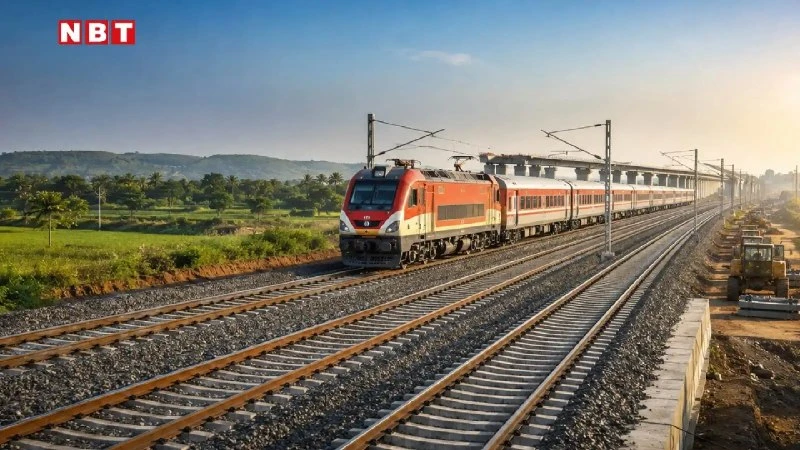
Indian Railways is taking a massive step forward to tackle network congestion and boost passenger and freight efficiency across the country. Union Railway Minister Ashwini Vaishnaw officially confirmed an ambitious infrastructure initiative on Wednesday, August 26, 2026, to convert seven of the nation's most congested railway routes into four-line corridors. This project aligns closely with Prime Minister Narendra Modi's vision for superior national connectivity and accelerated economic growth.
Union Railway Minister Ashwini Vaishnaw confirmed the plan on Wednesday, August 26, 2026. These seven strategic corridors span approximately 11,000 kilometers in total. Despite representing only 16 percent of the country’s total railway network, these routes currently manage 41 percent of all rail traffic. The ambitious expansion covers the Howrah–Chennai, New Delhi–Howrah, Chennai–Mumbai, New Delhi–Chennai, Mumbai–Howrah, New Delhi–Guwahati, and Mumbai–Delhi corridors.
Understanding the High-Density Corridor Expansion
The decision to upgrade these specific segments comes as a much-needed relief for millions of daily commuters and freight operators. Because these seven routes carry nearly half of the entire nation's train movement, travelers frequently experience delays due to line saturation. By transitioning these high-density networks to four tracks, the government aims to separate passenger and freight traffic streams, ensuring smoother and more predictable train operations.
Minister Vaishnaw highlighted that this large-scale infrastructure upgrade directly addresses long-standing capacity constraints. Beyond improving punctuality, the four-lane project is expected to deliver substantial long-term environmental and economic benefits for India, paving the way for faster freight transit and the introduction of additional passenger services in the near future.