Indian Railways starts nationwide cleanliness drive for station drinking water infrastructure
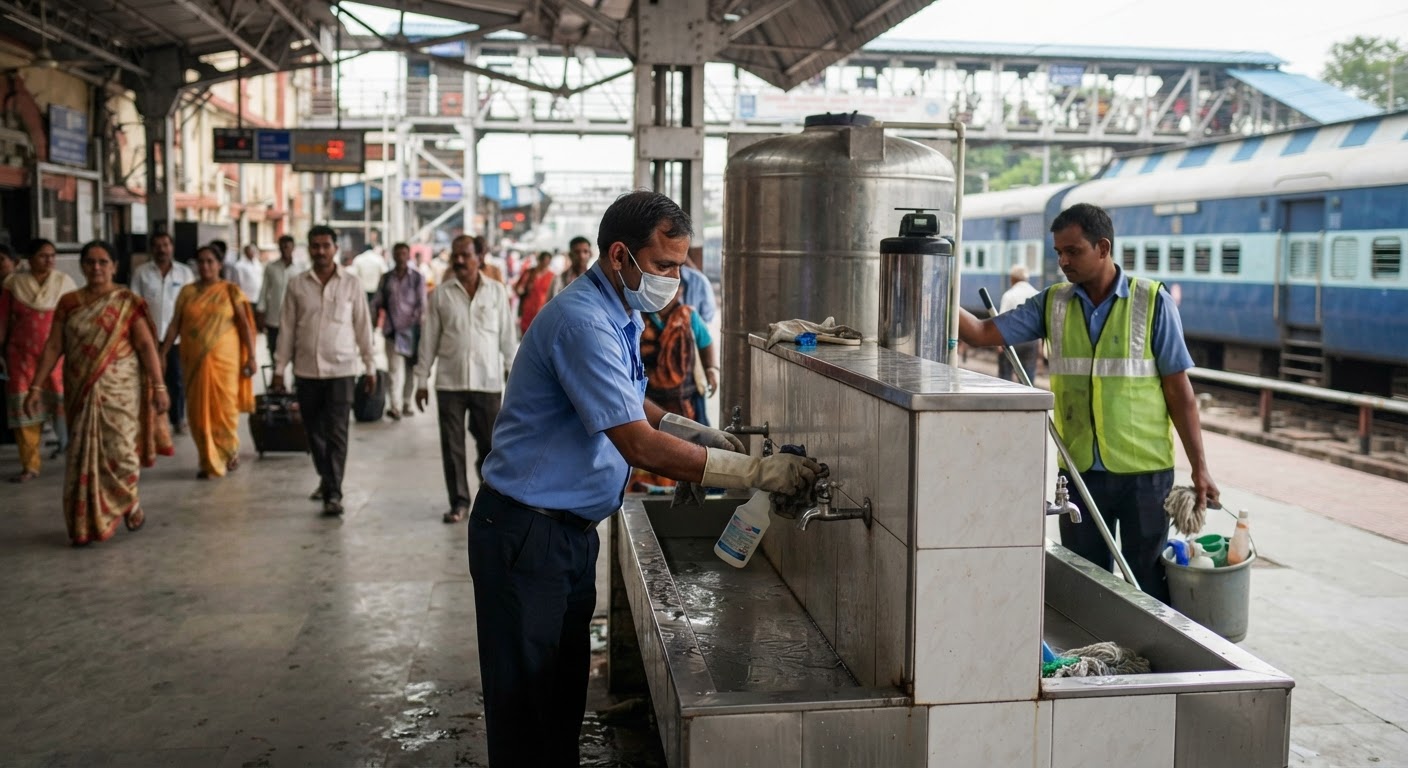
Indian Railways has initiated a nationwide cleanliness and disinfection drive targeting all drinking water infrastructure across its network to ensure the safety of passengers and railway personnel. Commencing on August 24, 2026, the movement follows directives from Union Railway Minister Ashwini Vaishnaw and the Railway Board, aimed at rectifying deficiencies in water supply systems.
Comprehensive Inspection and Cleaning of Water Systems
Under this action plan, Zonal Railways are conducting comprehensive inspections of all components, including sources, treatment plants, underground and overhead tanks, water booths, and taps. All drinking water tanks are being drained, desludged, scrubbed, and disinfected to remove impurities. Officials are implementing strict protection measures for vents and overflow points to prevent contamination from birds, animals, or algae. The initiative also requires the immediate repair or replacement of damaged pipelines, tanks, and water-dispensing infrastructure, while ensuring no cross-connections exist between potable and non-potable systems.
Purification and Upgrades at Stations
Specific attention is being directed toward the maintenance of water coolers and UV/RO purification systems. Zonal authorities are tasked with the timely replacement of filter candles and ensuring all equipment is fully functional. This operational shift comes in response to a Comptroller and Auditor General report that previously identified E. coli presence in drinking water, prompting the railway to install Tank to Tap filtration and monitoring systems at approximately 20,000 locations.
Quality Testing and Accountability
Water quality testing protocols have been intensified to include physical, chemical, and bacteriological analysis of samples from sources, storage units, vending machines, and taps. Daily residual chlorine monitoring is now mandatory across the network. Zonal Railways must submit station-wise reports detailing identified deficiencies and corrective actions to the Railway Board to maintain systematic accountability. This mandate extends beyond passenger terminals to encompass drinking water facilities within railway colonies and workplaces to guarantee hygienic water supplies throughout the entire ecosystem.