Indian Railways announces mega plan to quadruple 11000 kilometers of dense routes
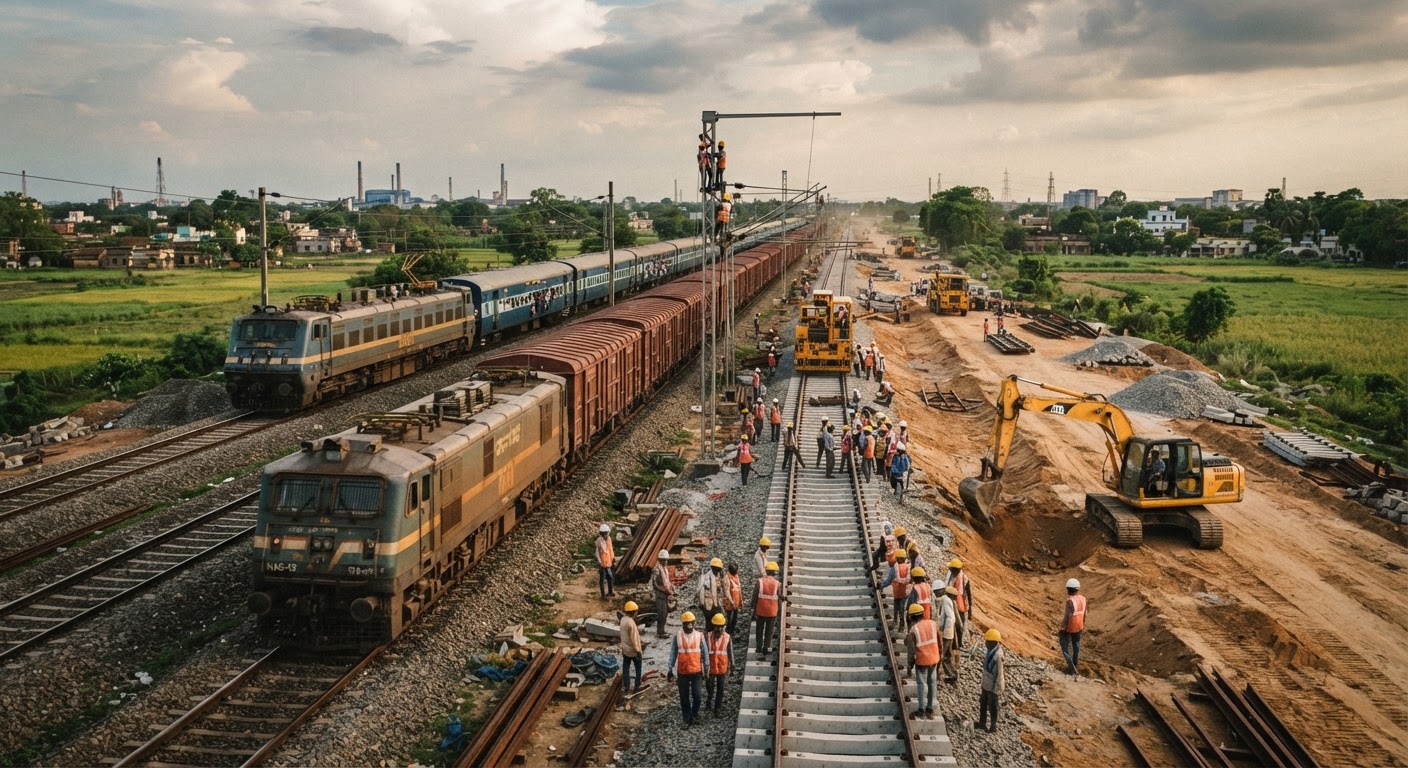
Indian Railways has unveiled an ambitious mega plan to expand seven critical high-density rail corridors into four-lane tracks spanning approximately 11000 kilometers to significantly enhance network capacity and reduce transport costs. Railway Minister Ashwini Vaishnaw highlighted this infrastructure project on Wednesday August 26 2026 as a central component of Prime Minister Shri Narendra Modi's vision for a modernized cleaner and high-capacity railway network that facilitates more efficient passenger and freight movement across the country.
The identified corridors represent vital arterial routes and include Delhi-Howrah, Howrah-Chennai, Chennai-Mumbai, Mumbai-Delhi, Delhi-Chennai, Mumbai-Howrah, and Delhi-Guwahati. Despite accounting for only about 16 percent of the total national railway network, these seven routes manage roughly 41 percent of India's overall railway traffic. By quadrupling these tracks, Indian Railways seeks to ease persistent congestion, improve operational flexibility, and enable the introduction of more trains.
Current Status and Project Timeline
While construction is already underway across significant portions of these routes, some remaining sections are currently in the Detailed Project Report approval phase, with construction expected to commence shortly. This effort complements recent administrative actions, such as the Cabinet Committee on Economic Affairs' approval on August 21 2026 for four additional railway projects totaling approximately Rs 9,450 crore, which will add roughly 410 kilometers to the network.
Broader Modernization Drive
These massive infrastructure developments are part of a wider modernization drive implemented by the national transporter. Alongside track expansion, Indian Railways is actively working on the rollout of the Kavach automatic train protection system and the continuous introduction of modern Vande Bharat train services to ensure a safer and more comfortable journey for everyday passengers.