Super Vasuki: Indian Railways operated longest freight train with 295 wagons
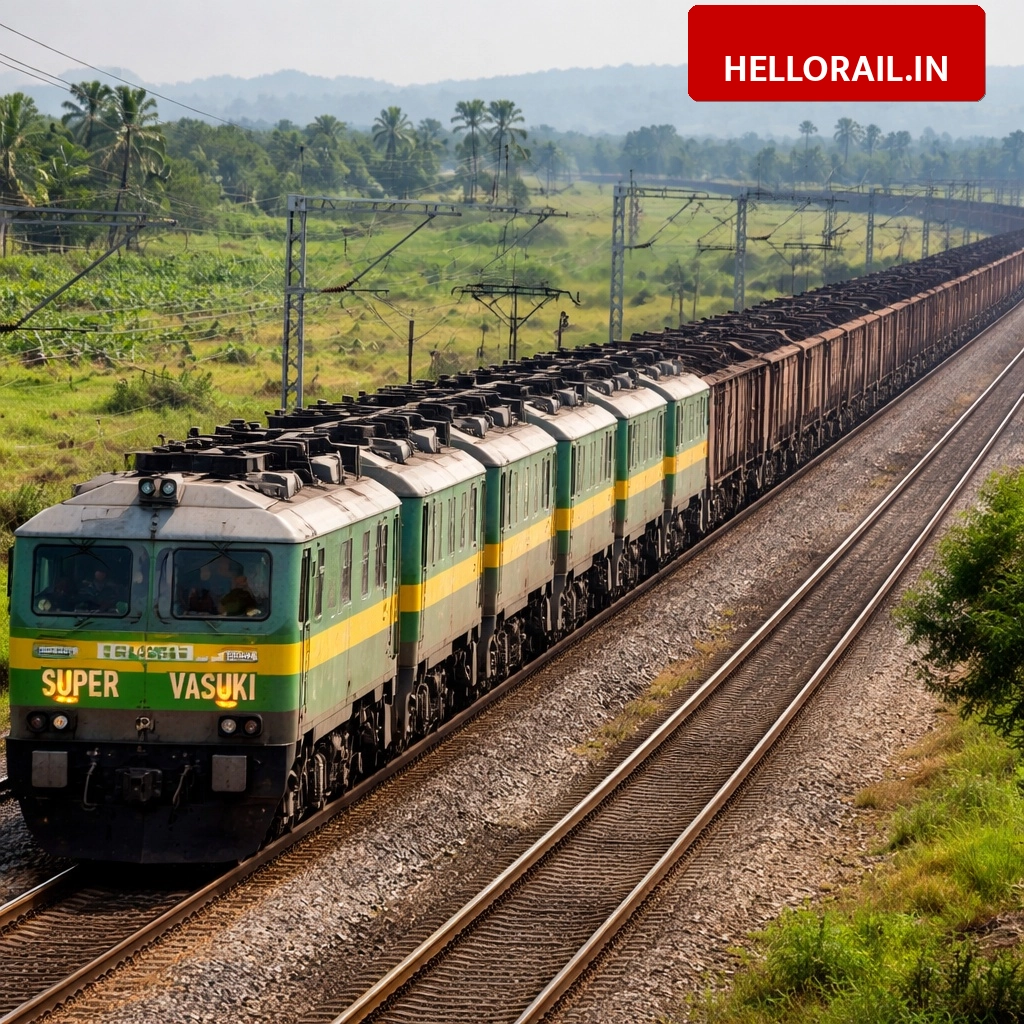
Indian Railways achieved a major milestone by operating the Super Vasuki, the longest and heaviest freight train in the country. This operation took place on August 15, 2022, as part of the Azadi Ka Amrit Mahotsav celebrations. The South East Central Railway (SECR), specifically the Bilaspur Division, managed the formation and movement of this massive convoy.
What are the key specifications of Super Vasuki
The Super Vasuki was created by joining five separate freight train rakes into a single unit. It measured approximately 3.5 to 4.2 kilometers in length and carried a massive load of coal. The train used advanced signaling coordination and multiple locomotive control technology to manage the heavy haul operation.
| Feature | Details |
|---|---|
| Total Wagons | 295 |
| Total Load | 27,000 tonnes of coal |
| Route | Korba to Rajnandgaon (Chhattisgarh) |
| Distance Covered | 267 kilometers |
| Travel Time | 11 hours 20 minutes |
| Operation Date | August 15, 2022 |
How does this impact railway logistics
Railway officials stated that the coal carried by one Super Vasuki trip is enough to power a 3000 MW power plant for an entire day. This is three times the capacity of a standard railway rake. Such long trains help in reducing logistics costs and decreasing the turnaround time for wagons. Railway Minister Ashwini Vaishnav mentioned that these operations help increase the railway’s share in freight transport and prevent fuel shortages at power plants during peak demand seasons.
Frequently Asked Questions (FAQs)
What was the purpose of the Super Vasuki train?
It was operated to improve freight efficiency and ensure a steady supply of coal to power plants, especially during peak demand, by carrying 27,000 tonnes in one go.
Which zone operated the Super Vasuki train?
The South East Central Railway (SECR), specifically the Bilaspur Division, was responsible for the formation and operation of this train.