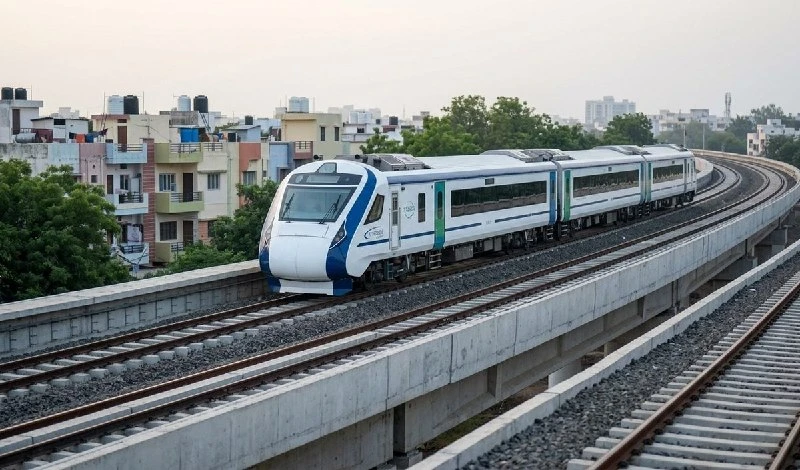
Indian Railways is actively working to elevate the operational speed of the nation's first hydrogen train to 110 kilometers per hour. Railway Board Chairman and CEO Satish Kumar made this announcement in Indore on September 6, 2026, highlighting the next steps in India's green rail journey. Prime Minister Narendra Modi had previously inaugurated this pioneering service on the Jind-Sonipat route in Haryana on July 17, 2026.
The ambitious project is a collaborative effort involving the Indian Railways, the Research, Designs and Standards Organisation (RDSO), and the Integral Coach Factory (ICF) in Chennai. The broader vision includes deploying
35 hydrogen trains across eight identified hilly routes. The government is currently engaging with various stakeholders to assess technical aspects and fuel supply infrastructure for future expansion.
The hydrogen train utilizes advanced fuel cell technology to generate electricity on board, releasing only water vapor as a byproduct to ensure
zero carbon emissions. The train configuration includes
10 coaches, two hydrogen driving power cars capable of generating a combined
2,400 kilowatts, lithium iron phosphate batteries, and specialized hydrogen cylinders. Supporting infrastructure includes India's first dedicated hydrogen storage facility, established in Jind.
Safety remains a top priority for this cutting-edge railway project. The train is equipped with
multiple independent systems to detect hydrogen leaks, extreme temperatures, fire, and smoke. Furthermore, the design incorporates automated shut-off mechanisms and continuous ventilation systems to maintain optimal operational security for all passengers.