Indian Railways upgrades the Delhi Howrah route for high speed train operations
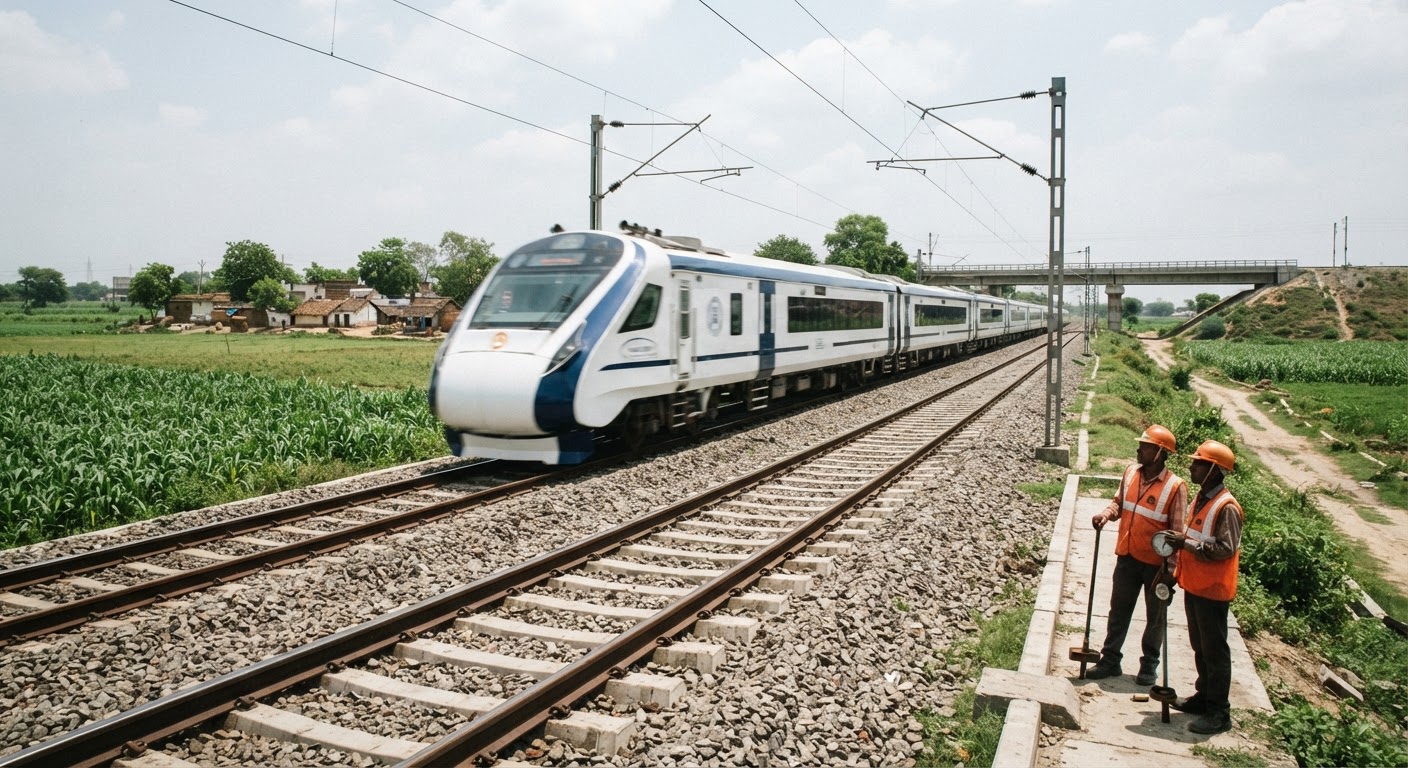
Indian Railways is actively accelerating its ambitious initiative to increase train operating speeds to 160 kilometers per hour on the Delhi-Howrah route, a major infrastructure upgrade designed to directly benefit millions of regular travelers across five states including Uttar Pradesh and Bihar. As part of the nationwide Mission Raftaar project, the vast 1,525-kilometer corridor is currently undergoing extensive technological and physical modernization to reduce overall journey travel time by approximately five hours, which will potentially bring the total transit time down from the current duration to just 12 hours. According to an official PIB release, the Cabinet Committee on Economic Affairs has approved 11,000 crore rupees for crucial multi-tracking initiatives, including the four-laning of seven high-density railway corridors to support this massive upgrade.
Major Infrastructure and Electrical Enhancements
To successfully support high-speed electric locomotive operations, massive engineering and power supply upgrades are being carried out across the network. Recent milestones include the successful charging of three new traction sub-stations in the North Central Railway network along the Kanpur-Mughalsarai section, specifically located in Karchana, Kurasti Kalan, and Manauri. Furthermore, the Chhata traction sub-station in the Agra division has also been successfully charged, while critical electrical works have been finalized in Kosi Kalan, Mathura, and Shola. North Central Railway CPRO Dr. Shivam Sharma has confirmed that several supplementary works, including extensive track fencing and overhead equipment modification, are currently moving forward in various stages of progress.
Enhanced Safety with Kavach 4.0 and Vande Bharat Trials
Passenger safety remains a top priority during these upgrades, highlighted by the deployment of the indigenous Kavach 4.0 automatic train protection system. By July 2026, the Kavach 4.0 technology had already been successfully commissioned across 2,633 route kilometers, which includes an impressive 1,210 kilometers specifically along the Delhi-Howrah corridor. Developed natively by the Research Design and Standards Organization, this state-of-the-art system is specifically engineered to prevent catastrophic human errors and automatically apply emergency brakes in danger zones. Demonstrating the success of these trials, on September 9, 2026, a modern 16-coach Vande Bharat sleeper train successfully completed high-speed testing at 160 kmph along the Hazrat Nizamuddin-Palwal route, paving the way for a faster and safer rail travel future.