Indias First High Speed Rail Test Track Near Sambhar Lake Nears Completion
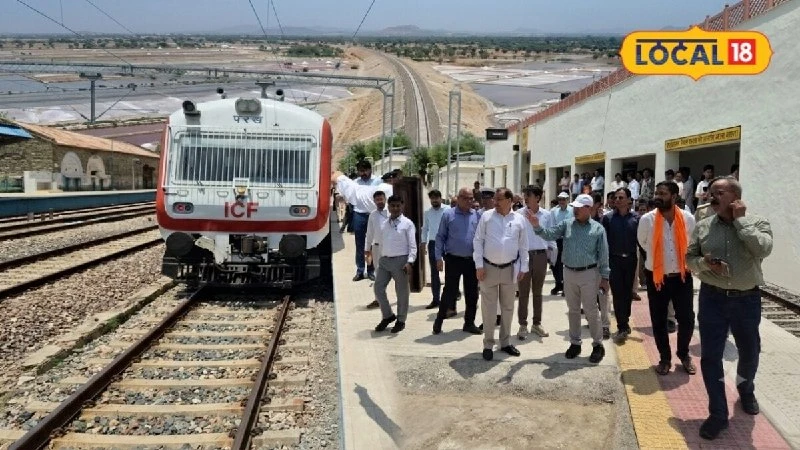
India is set to achieve a major milestone in railway infrastructure with the upcoming completion of the countrys first dedicated high-speed rail testing track near Sambhar Lake in Rajasthan. This massive 64-kilometer project is being built with an estimated investment of ₹967 crore to facilitate rigorous performance and safety trials for modern rolling stock including bullet trains, metro coaches, and semi-high-speed trains at speeds reaching up to 250 kilometers per hour. The project is jointly overseen by the Research Design and Standards Organisation and the North Western Railway.
General Manager of North Western Railway Pankaj Sharma recently inspected the crucial infrastructure spanning between Gudha, Thathana, and Mithri within the Jodhpur Division. The facility incorporates advanced technologies such as artificial intelligence, high-resolution sensors, and real-time data recording systems to evaluate critical parameters including vehicle stability, aerodynamics, wheel-rail interaction, and braking capacity. Engineering features across the stretch include seven large bridges, 129 minor bridges, and four primary stations located at Gudha, Jabdinagar, Nawa, and Mithadi. Due to the challenging alkaline environment of the Sambhar Lake region, engineers have specifically utilized specialized stainless steel components to ensure long-term corrosion resistance.
Project Timeline and Operational Phases
The comprehensive facility includes a testing loop at Gudha, a quick-testing loop at Nawa, and a curve-testing loop at Mithri, all of which are currently in advanced stages of development. Authorities have confirmed that initial portions of this pioneering project are expected to become operational by September 2026, while the remainder of the testing facility is scheduled for full completion by the end of 2026. This ground-breaking laboratory will serve as Indias premier testing ground for advanced track materials, cutting-edge signaling systems, and geotechnical integrity under high-speed operational conditions.