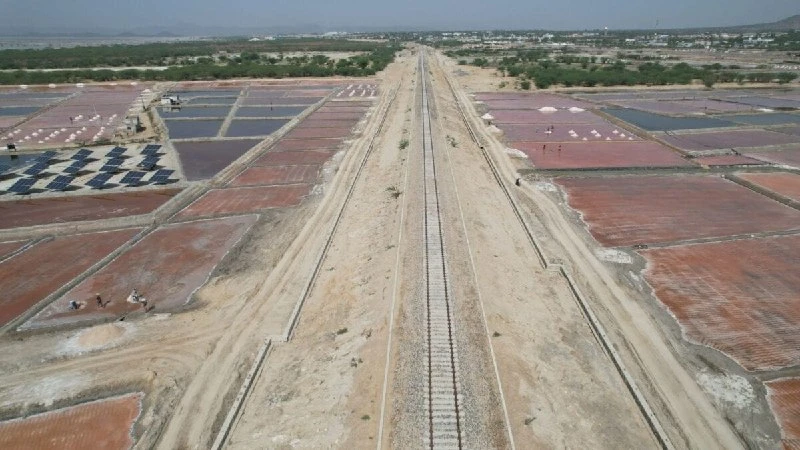
Indian Railways is making rapid progress on a major infrastructure milestone as the countrys first dedicated high-speed railway test track reaches its final stages of development. Located between Gudha and Thathana Mithri in the Jodhpur Division of Rajasthan, this ambitious project is situated approximately 70 kilometers from Jaipur near Sambhar Lake and is currently 95 percent complete with a projected final completion by the end of 2026. This pioneering facility is being developed under the supervision of the Research Design and Standards Organisation and the National High Speed Rail Corporation Limited at an estimated cost of Rs 967.07 crore. Senior railway officials including North Western Railway General Manager Pankaj Sharma recently inspected the site to review the progress, while Chief Public Relations Officer Amit Sudarshan confirmed that the project has entered its final phase following a window trailing inspection conducted on August 22, 2026.
The infrastructure project spans a
total sanctioned length of 63.56 kilometers and is thoughtfully designed with multiple specialized loops for comprehensive railway testing. The layout features a
23-kilometer main testing line, a
13-kilometer high-speed loop situated in Gudha, and a
20-kilometer curve testing loop located in Mithri. To withstand the unique local environmental conditions near Sambhar Lake, the track incorporates specially engineered materials that offer high resistance against corrosion and vibration, alongside specialized S-shaped and kalash curves.
Built to accommodate rigorous international testing standards including UIC-518 and EN-14363, this facility will play a crucial role in evaluating modern rolling stock. The track is engineered to support
speeds up to 230 km/h, with operational testing specifically planned in the range of
200 to 220 km/h. This setup will be instrumental in assessing the performance of India's semi-high-speed Vande Bharat trainsets among other advanced rolling stock. According to the scheduled timeline, initial trials are set to
commence at 160 km/h in September, paving the way for higher velocity
testing at 220 km/h scheduled to begin in February 2027.