India is building its first high-speed railway test track in Rajasthan
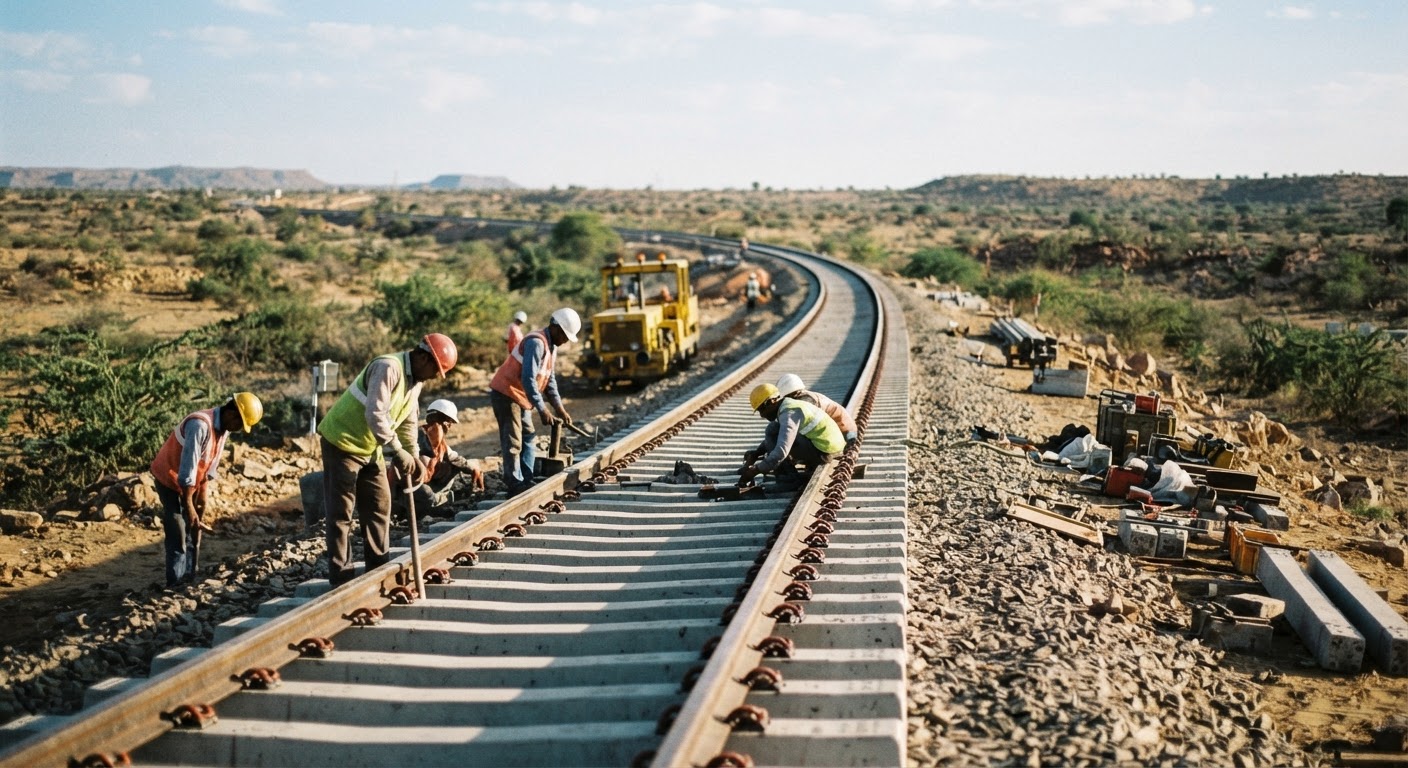
Indian Railways is swiftly advancing towards the completion of the country's very first dedicated high-speed test track situated in the Jodhpur Division of Rajasthan. This monumental infrastructure project is being developed by the Research Design and Standards Organisation at an estimated cost of Rs 967.07 crore. The state-of-the-art facility spans approximately 59 kilometers between Gudha and Thathana Mithri, located roughly 70 kilometers from Jaipur. Designed to support rigorous testing of rolling stock, track materials, bridges, traction distribution equipment, and advanced signaling systems, the facility will safely accommodate speeds up to 220 kmph with a future expansion potential of up to 230 kmph.
Key Project Highlights and Infrastructure Details
The ambitious test track infrastructure incorporates several specialized loops and technical sections to thoroughly evaluate railway equipment. The project features four stations namely Gudha, Jabdinagar, Nawa, and Mithri alongside seven major bridges and 129 minor bridges. The entire track configuration includes a 23-km main line, a 13-km high-speed loop at Gudha, a 3-km accelerated testing loop at Nawa, a 20-km curve testing loop at Mithri, and a unique 7-km twisting track section specifically engineered to evaluate train responses under damaged track conditions. Upon full completion, this facility will empower India to strictly comply with international testing standards including UIC-518 and EN-14363.
Timeline for Completion and Trials
Construction work is progressing rapidly in multiple phases across the region. The initial 31.5-km high-speed stretch along with the 3-km accelerated loop is targeted for completion by September 2026. Furthermore, the crucial 20-km curve testing loop at Mithri is advancing swiftly and is scheduled to become operational by the end of 2026. Full-scale train trials, which will include rigorous testing for upcoming Vande Bharat trainsets, are officially projected to commence during the 2027-28 financial period. By shifting trial operations away from heavily congested regular passenger networks to this dedicated facility, Indian Railways expects to accelerate advanced technology adoption and drastically improve overall network safety and performance.