Kalka-Shimla Heritage Line: Major Restoration Work Underway
Restoration work accelerates on the Kalka-Shimla heritage line following monsoon damage. Full services expected after November 30.
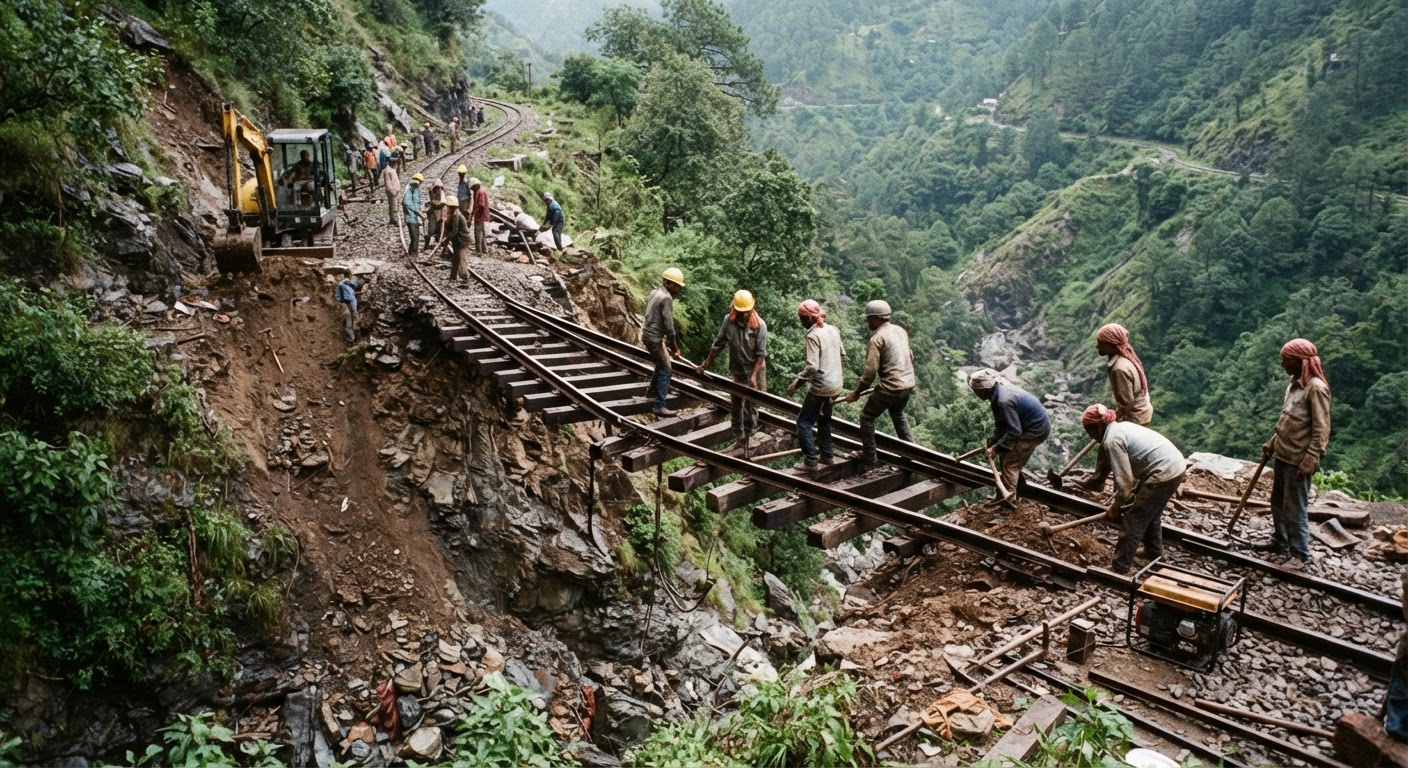
The iconic UNESCO World Heritage Kalka-Shimla railway line is undergoing intensive restoration efforts to repair severe damage caused by the heavy monsoon rains of August 2026. Following the destruction of critical infrastructure, work is now accelerating to bring this historic route back to full operational capacity.
The Impact of Monsoon Destruction
The damage occurred between August 29 and 31, when torrential rainfall caused a 10-15 meter section of track to become suspended near Bridge No. 57. The heavy downpour washed away essential soil and culvert structures, creating a dangerous gap in the line. The situation required an immediate response on August 30, when approximately 400 passengers and 40 railway staff were safely evacuated to Kalka.
Initial restoration efforts faced significant hurdles. On September 7, persistent rains damaged newly built retaining walls between Taksal and Gumman, as well as various construction materials, temporarily stalling progress.
Accelerated Repairs and Engineering Focus
With weather conditions improving as of October 1, 2026, the pace of work has increased significantly. Current operations include:
- Excavation: JCB machines are actively excavating to lay new pillars.
- Track Relaying: Approximately one kilometer of track is currently being relaid.
- Structural Reinforcement: Senior railway engineers from Ambala, Delhi, and Chandigarh are supervising the critical repairs at Bridge No. 57 and 58.
Train Service Updates
To facilitate these essential repairs, railway authorities have implemented the following service changes:
- Full Suspension: All ten train services on the heritage route are suspended until November 30, 2026.
- Partial Resumption: While partial services between Dharampur and Shimla resumed on September 5, 2026, and reached full capacity by September 30, the entire route is not yet operational.
Officials estimate that while the current phase of major repairs should conclude within the next month, it may take an additional two months before the full route resumes normal operations.