Kavach Safety Live: Agra Cantt–Dholpur Section Now Collision-Proof!
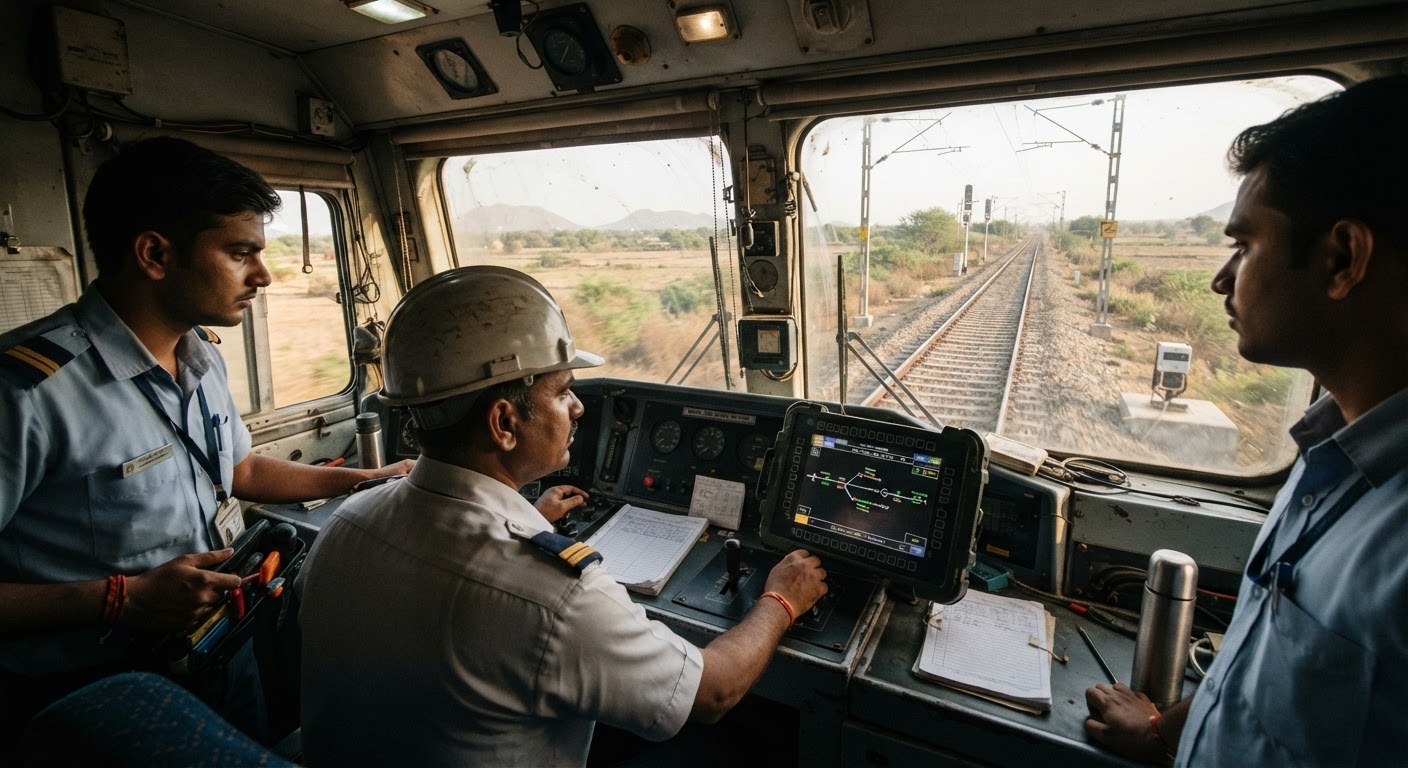
Indian Railways has successfully integrated the indigenous Kavach Automatic Train Protection (ATP) system into the 52.46-kilometer stretch between Agra Cantt and Dholpur. This milestone, achieved on September 24, 2026, marks a significant step forward in securing the national rail network through locally developed safety technology.
A Major Safety Milestone for Agra Division
The implementation was spearheaded by the Agra Project Unit, operating under the leadership of North Central Railway General Manager Naresh Pal Singh and Principal Chief Signal and Telecommunication Engineer Deepak Kumar Sinha. The project also saw critical oversight from Gagan Goyal, the Divisional Railway Manager for Agra.
How the Kavach System Works
The Kavach technology serves as a high-tech safeguard against human error by constantly monitoring train movements. If a potential danger is detected, the system can automatically intervene to control train speeds. This deployment is specifically designed to prevent several types of critical incidents:
- Head-on collisions between trains traveling in opposite directions.
- Rear-end collisions caused by following trains.
- Rollaway incidents where a train moves without authorization.
- Standstill violations that could lead to accidents.
Precision Engineering with RFID Technology
To guarantee pinpoint accuracy in train location and seamless data transmission, engineers installed 720 RFID tags along the entire 52.46-kilometer route. These tags ensure that the system knows the exact position of every train at all times.
The development of this system was a collaborative effort involving the Research Design and Standards Organisation (RDSO) alongside private sector partners such as Medha Servo Drives, Kernex Microsystems, and HBL Power Systems.
This advancement in the Agra Division comes at a time of rapid technological growth within the network, following the recent introduction of the Kavach 4.0 system on the South Central Railway, which features improved interfaces and even higher location accuracy.