ECR to Test Kavach Safety System in DDU and Dhanbad Divisions
East Central Railway to conduct Kavach safety trials in DDU and Dhanbad divisions from Nov 10-14, 2026, to boost train safety and speed.
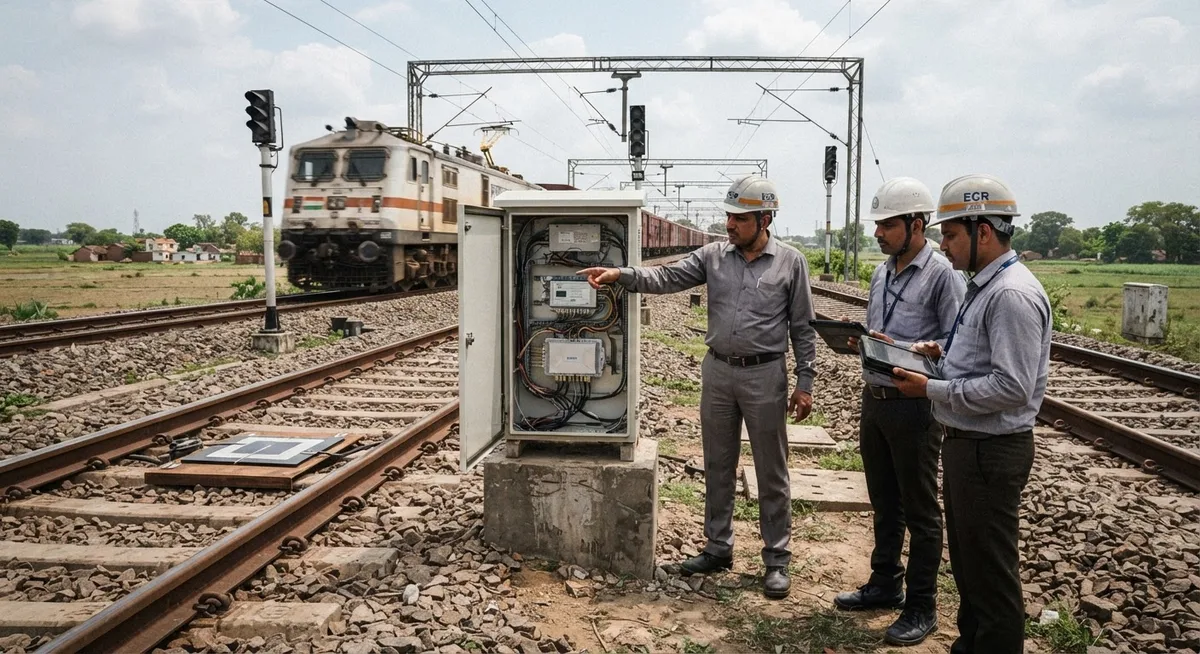
The East Central Railway (ECR) is taking a massive leap toward securing its high-density corridors. The railway administration has announced the schedule for the Independent Safety Assessment (ISA) trials of the Kavach safety trials ECR, focusing on the Pandit Deen Dayal Upadhyay (DDU) and Dhanbad (DHN) divisions.
High-Tech Safety Trials Scheduled for November 2026
These critical technical evaluations are set to take place from November 10 to November 14, 2026. The trials are a major milestone in the deployment of Kavach Version 4.0, an indigenous collision avoidance technology designed to modernize Indian rail safety and minimize the risk of human error.
Boosting Speed and Precision with Kavach 4.0
The implementation of this advanced system is a key part of the 'Mission Raftaar' objective, which aims to enhance operational efficiency and allow trains to run at higher speeds. By deploying Kavach, the railway intends to facilitate train operations at speeds of up to 160 kilometers per hour on vital routes, such as the Delhi-Howrah corridor.
The Version 4.0 upgrade brings several technological advantages to the table:
- Enhanced Location Accuracy: Providing superior precision in tracking train positions.
- Direct Interface: Seamless integration with existing electronic interlocking systems.
- SPAD Prevention: A robust mechanism to prevent Signal Passing at Danger (SPAD), which is a primary cause of rail accidents.
Technical Verification and Infrastructure Investment
During the five-day trial period, technical teams will focus on verifying the reliability of communication between locomotives and trackside equipment. It is essential that the system meets the strict standards established by the Research Designs and Standards Organisation (RDSO) to ensure seamless integration and safety.
This technological push is backed by significant financial commitment. The Ministry of Railways has prioritized these infrastructure upgrades with a budgetary allocation of ₹2,066 crore for the 2026-27 period, ensuring that the transition to high-speed, high-safety corridors is both rapid and reliable.