Mumbai-Ahmedabad Bullet Train: B-28 Train Sets & New Track Tech
India advances the Mumbai-Ahmedabad Bullet Train project with indigenous B-28 train sets and advanced ballastless track technology.
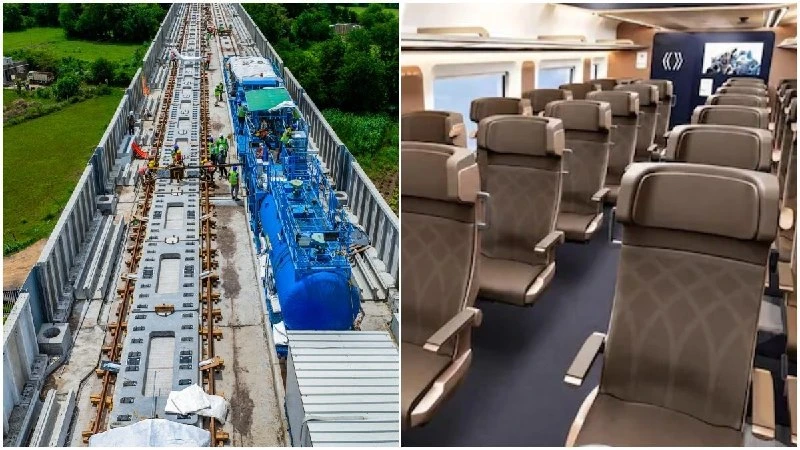
The Mumbai-Ahmedabad Bullet Train project is hitting major milestones as India prepares for the era of high-speed rail. With a focus on indigenous manufacturing and cutting-edge infrastructure, the corridor is moving closer to reality through the coordinated efforts of the National High-Speed Rail Corporation Limited (NHSRCL) and the Ministry of Railways, led by Minister Ashwini Vaishnaw.
Advanced Ballastless Track Technology
To support operational speeds of 249 km/h, engineers are implementing highly specialized infrastructure. Unlike conventional railway systems that rely on crushed stone ballast to support sleepers, the bullet train network utilizes ballastless tracks made of reinforced concrete slabs.
This engineering design is critical for several key reasons:
- Stability: Maintaining a rigid, unwavering structure during high-speed transit.
- Vibration Control: Significantly reducing the vibrations felt by passengers and the surrounding environment.
- Safety: Providing a continuous, smooth surface to ensure maximum passenger comfort and security.
Furthermore, the corridor integrates advanced technology such as canted turnouts and swing-nose crossings, which allow for efficient track switching without the need for aggressive deceleration.
Indigenous B-28 Bharat Train Sets
In a major boost to the 'Make in India' initiative, India is developing its own high-speed rolling stock. The B-28 (Bharat 28), India’s first indigenous high-speed train set, is currently undergoing critical "squeeze test" body shell assessments at the BEML facility in Bengaluru.
The B-28 is designed to be a powerhouse of efficiency and domestic engineering, featuring:
- Capacity: A total of 557 passengers accommodated across eight specialized coaches.
- Speed: A design capable of reaching speeds of up to 280 km/h.
Project Timeline and Commercial Launch
While the project leverages Japanese Shinkansen safety and operational standards, the roadmap for Indian commuters is now taking shape. Official timelines indicate that trial runs are scheduled to take place on the 100-kilometer Surat-Vapi section between May and June 2027.
Following the successful completion of these vital trials, the government is targeting a full commercial launch for the bullet train service in August 2027.