Mumbai-Ahmedabad Bullet Train Power System Set for High Speed
NHSRCL is installing a 2x25 kV traction system and 14 substations to power the Mumbai-Ahmedabad Bullet Train at speeds up to 320 km/h.
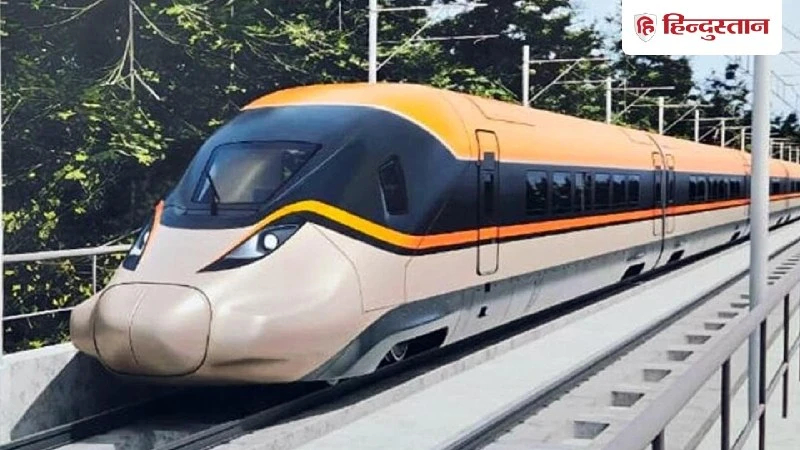
The National High Speed Rail Corporation Limited (NHSRCL) is establishing the Mumbai-Ahmedabad Bullet Train power infrastructure required for seamless high-speed travel. To ensure the corridor can support speeds of up to 320 kilometers per hour, a sophisticated 2x25 kV overhead traction system is being implemented across the entire route.
The 2x25 kV Power Supply Process
To maintain uninterrupted service, the power supply follows a highly organized sequence. Electricity travels from the national power grid to designated grid substations, where it is then converted by traction substations into the specific voltage required for high-speed travel. This energy is finally routed to the overhead electric wires installed above the railway tracks.
14 Substations to Power the 508km Corridor
A total of 14 traction substations (TSS) are being constructed to cover the 508-kilometer corridor. The network is strategically distributed between two states:
- Maharashtra: Five substations will be located in Mumbai, Thane, Virar, Boisar, and the Thane depot.
- Gujarat: Nine substations will serve Vapi, Bilimora, Surat, Bharuch, Vadodara, Anand, Mahemdabad, Ahmedabad, and the Sabarmati depot.
Milestone Achievement in Bilimora
In Gujarat’s Navsari district, the Bilimora substation is nearing completion, marking a significant milestone for the network. Equipment installation—including transformers, circuit breakers, control panels, and changeover switches—is already finished, with testing and commissioning currently underway. The Gujarat Energy Transmission Corporation Limited (GETCO) will supply the necessary electricity to the Bilimora facility via the 220 kV Ambetha grid substation.
Advanced Monitoring and Reliability
To manage the network and prevent disruptions, NHSRCL is integrating cutting-edge technology. A centralized control center will provide real-time monitoring of the entire traction power supply. Furthermore, the infrastructure includes:
- 16 Distribution Substations: These will provide power to stations, signaling systems, maintenance facilities, and other operational needs.
- 31 Switching Posts: These are designed to ensure a continuous supply and allow for immediate fault isolation to minimize service interruptions.