Mumbai Ahmedabad Bullet Train: Vadodara Portal Beams Done
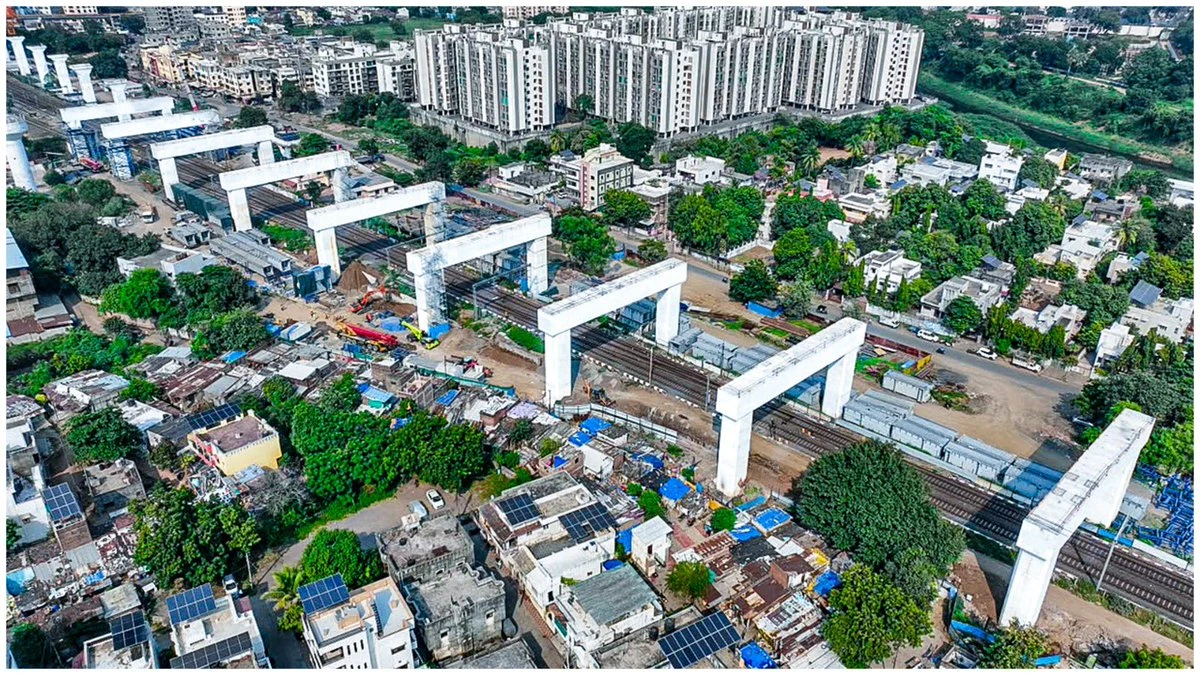
The Mumbai Ahmedabad High Speed Rail (MAHSR) project has achieved a massive engineering milestone. All 14 portal beams spanning the high-traffic Delhi-Mumbai Rajdhani line in Vadodara have been successfully completed, ensuring the 508-kilometer corridor remains on track for its phased launch.
Engineering Feat: Massive Beams Over Live Tracks
Constructing these structures was a complex task due to the limited space available above the active railway tracks. To avoid disrupting the high volume of train traffic on the existing main line, engineers utilized the cast in situ method.
- Dimensions: Each beam measures 37 metres in length, 4 metres in height, and 4 metres in width.
- Weight: Once completed, each beam weighs approximately 1,500 tonnes.
- Material: Each structure required 590 cubic metres of concrete to build.
Ten of these massive beams are positioned between the Vadodara station and Vishwamitri, while the remaining four are situated toward Ahmedabad. These beams will eventually support composite girders roughly 40 metres long, allowing the elevated bullet train track to glide over the existing rail network without interference.
Project Progress and 2027 Launch Goals
According to the Ministry of Railways and the National High Speed Rail Corporation Limited (NHSRCL), the project has reached 80 percent completion regarding land acquisition and major structural works. The government's primary target remains the inauguration of the Surat to Bilimora section in 2027.
Once the full corridor is operational, the travel experience will be transformed:
- Limited Stop Journeys: Travelers can move between Mumbai and Ahmedabad in just over two hours.
- All-Station Service: The total journey time is expected to be around three hours.
- Efficiency: This offers a massive speed advantage compared to the current 6 to 8 hours required by conventional trains.
Technological and Financial Landscape
The project brings Japan's world-renowned Shinkansen technology to India, with significant financing provided by the Japan International Cooperation Agency (JICA). While the original sanctioned cost was ₹1,08,000 crore, officials are considering a revised estimate between ₹1.98 lakh crore and ₹2.1 lakh crore to account for inflation and land acquisition complexities.
Other notable achievements include the completion of the 480-metre Sabarmati River bridge in Ahmedabad and the commencement of a 100-metre steel bridge in the Thane district. As the project moves forward, the focus shifts toward track laying, system installation, and anticipated trial runs in 2027.