Namo Bridge & Vande Bharat Sleeper to Transform Varanasi Connectivity
Rail Minister Ashwini Vaishnaw unveils the Namo Bridge in Varanasi and launches the Varanasi-Delhi Vande Bharat Sleeper Express.
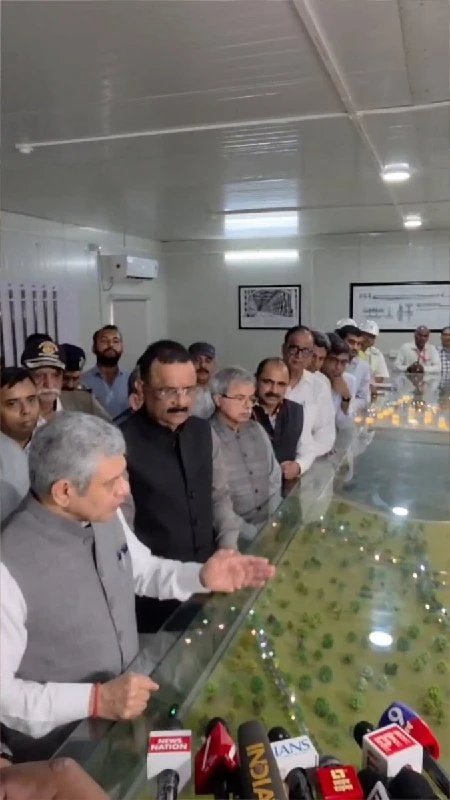
Varanasi is on the brink of a massive infrastructural revolution. Union Minister of Railways, Ashwini Vaishnaw, recently conducted an inspection of the Kashi Railway Station redevelopment and the ongoing construction of the monumental "Namo Setu" (Namo Bridge). This project is set to redefine regional transportation and strengthen rail connectivity across Uttar Pradesh for the next century.
The Mega Namo Setu Project
The Namo Bridge is a sophisticated 2.5-kilometer double-decker hybrid structure designed to tackle the growing transportation demands of the holy city. With an estimated budget of ₹2,657 crore, the project is expected to reach completion by 2029. The bridge features a unique dual-purpose design:
- Upper Deck: A massive six-lane highway to ease city traffic.
- Lower Deck: Four dedicated railway tracks to boost rail capacity.
Once operational, the bridge will provide seamless access to the Kashi Vishwanath Temple and the Namo Ghat, significantly reducing congestion in the city's core areas.
Vande Bharat Sleeper Express Launched
In a major boost to passenger comfort, Minister Vaishnaw and Uttar Pradesh Chief Minister Yogi Adityanath inaugurated the Vande Bharat Sleeper Express, connecting Varanasi and New Delhi. As the first Vande Bharat Sleeper service in North India, this 16-coach train is a leap forward in luxury travel.
Key features of the new service include:
- Capacity: 823 passengers across First AC, AC 2-Tier, and AC 3-Tier configurations.
- Speed: The service is scheduled to be 55 minutes faster than the Shiv Ganga Express.
- Frequency: The train will operate six days a week.
- Major Stops: The route includes Prayagraj, Kanpur Central, Aligarh, and Ghaziabad.
High-Speed Future: The Northern Corridor Bullet Train
The Minister also confirmed that Prime Minister Narendra Modi has approved the ambitious Northern Corridor bullet train network. This high-speed rail network will connect major hubs, including Delhi, Agra, Kanpur, Lucknow, Ayodhya, Varanasi, Patna, and Guwahati.
The impact on travel time will be revolutionary:
- Delhi to Lucknow: Reduced to just 2 hours and 12 minutes.
- Delhi to Varanasi: Reduced to approximately 3 hours and 33 minutes.
Massive Investment in Uttar Pradesh Railways
The transformation of the state's rail network is backed by significant financial commitment. For the 2026-27 financial year, Uttar Pradesh has been allocated ₹20,012 crore for rail infrastructure. This funding supports a wide array of modernization efforts, including:
- Implementation of the Kavach safety system.
- Redevelopment of 157 railway stations.
- Operation of 17 pairs of Vande Bharat and 18 pairs of Amrit Bharat Express trains.
With 9,100 route kilometers currently operational, these developments ensure that Uttar Pradesh remains at the forefront of India's railway modernization journey.