
















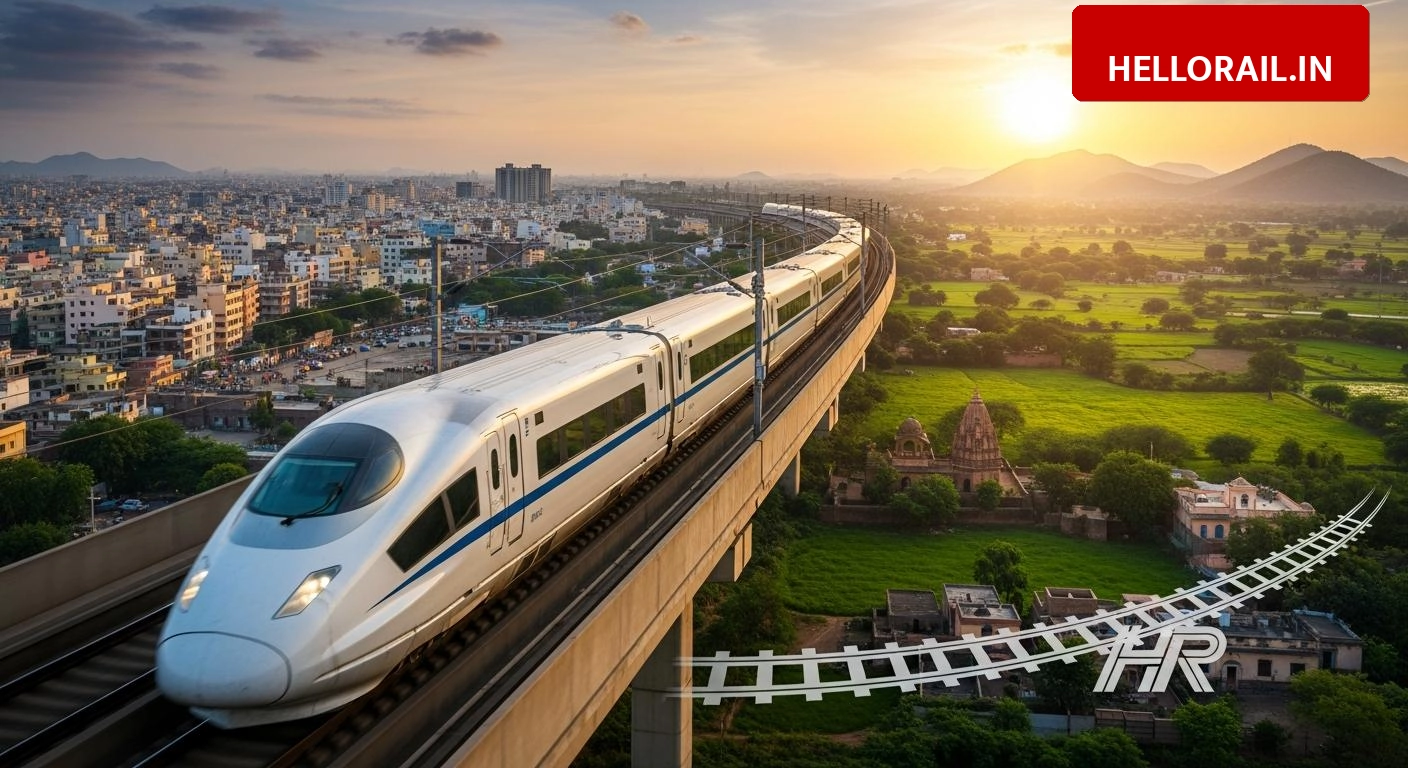

The Ministry of Railways has shared a major update regarding seven new high-speed rail corridors in India. On February 20, 2026, official sources confirmed that the detailed project reports for most of these routes have been submitted. These new lines are designed to run trains at speeds between 320 to 350 km per hour, which will drastically reduce the time it takes to travel between major cities.
🗞️: Indian Railways Sleeping Hours Changed, Passengers to Sleep at 10 PM Instead of 9 PM।
List of New Routes and Travel Time
The government has identified these seven corridors as essential connectors for economic growth. The routes will connect key IT hubs and cultural centers. According to the data released, the travel time on these routes will be less than half of what it takes currently by train or road.
Here is the estimated travel time for the new high-speed rail corridors:
| Route | Estimated Time |
|---|---|
| Mumbai – Pune | 48 Minutes |
| Pune – Hyderabad | 1 Hour 55 Minutes |
| Hyderabad – Bengaluru | 2 Hours |
| Hyderabad – Chennai | 2 Hours 55 Minutes |
| Chennai – Bengaluru | 1 Hour 13 Minutes |
| Delhi – Varanasi | 3 Hours 50 Minutes |
| Varanasi – Siliguri | 2 Hours 55 Minutes |
Project Cost and Construction Status
The total investment planned for this 4,000 km network is approximately ₹16 lakh crore. In the budget for 2026-27, the government allocated ₹2,78,000 crore to the Ministry of Railways to speed up these developments. The National High Speed Rail Corporation Limited (NHSRCL) is handling the planning and construction.
Reports state that most of these tracks will be elevated about 12 to 15 meters above the ground. This design helps in avoiding traffic issues and requires less land acquisition. As of late February 2026, the reports for six corridors are complete, and the Railway Board has asked officials to start preparing contract documents.
Ticket Prices and Workforce
While the exact ticket prices are not fixed yet, initial estimates suggest that the fares will be premium but stable. The estimated price for a 3rd AC equivalent seat could be around ₹2.4 per km, while a 1st AC seat might cost ₹3.8 per km. To ensure the project runs smoothly, young engineers are already being trained at existing project sites to handle the advanced technology required for these bullet trains.