







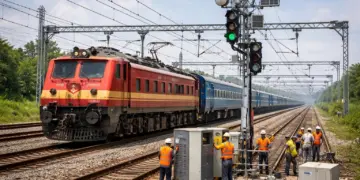

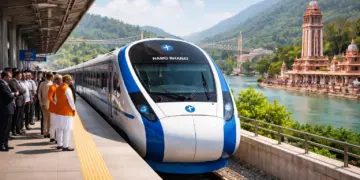


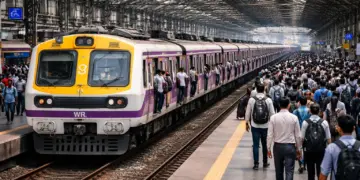
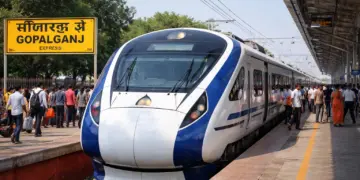









Recently, a passenger named Prakhar Pandey raised a serious query on social media after failing to get a lower berth on the Humsafar Express despite 100 seats being visible as available. Responding to the complaint regarding the February 13 journey, Indian Railways and IRCTC have clarified the exact reason behind this mechanism. It turns out that seat allocation is not just about vacancy but involves complex calculations for train safety managed by the CRIS software.
Why Software Denies Lower Berths? The Science of Center of Gravity
The allocation logic is primarily designed to maintain the stability of the moving train. To ensure safety at high speeds and on sharp curves, the passenger weight needs to be distributed evenly across the coach. The software focuses on the physics of the Center of Gravity to prevent accidents.
It first fills the middle seats of the coach and lower berths to keep the center of gravity low. If seats are filled unevenly or only on one side, it increases the risk of derailment during high speed. The system also ensures that weight is balanced across the length of the train, filling middle coaches first before the engine and tail ends.
Understanding Quota Rules and Booking Options
Sometimes vacant lower berths are reserved specifically for the Senior Citizen, ladies, or Divyang quotas. Usually, there are 6 lower berths in Sleeper and 4 in AC classes reserved for these categories. If you book under the General quota, the system might not allot those specific reserved seats even if they appear empty on the chart initially.
- Automatic Allocation: The system tries to auto-allocate lower berths to men over 60 and women over 45 if available at the time of booking.
- TTE Authority: A new update confirms that if a passenger does not board, the TTE can allot the empty seat to the next person immediately without waiting for the next station.
- Best Practice: To ensure you get the desired seat, always check the “Book only if lower berth is allotted” box while booking on IRCTC.