Rishikesh-Karnaprayag Rail: 83% Route Through Tunnels!
The Rishikesh-Karnaprayag railway project is making huge progress with 83% of the route through tunnels, cutting travel time to just 2-3 hours.
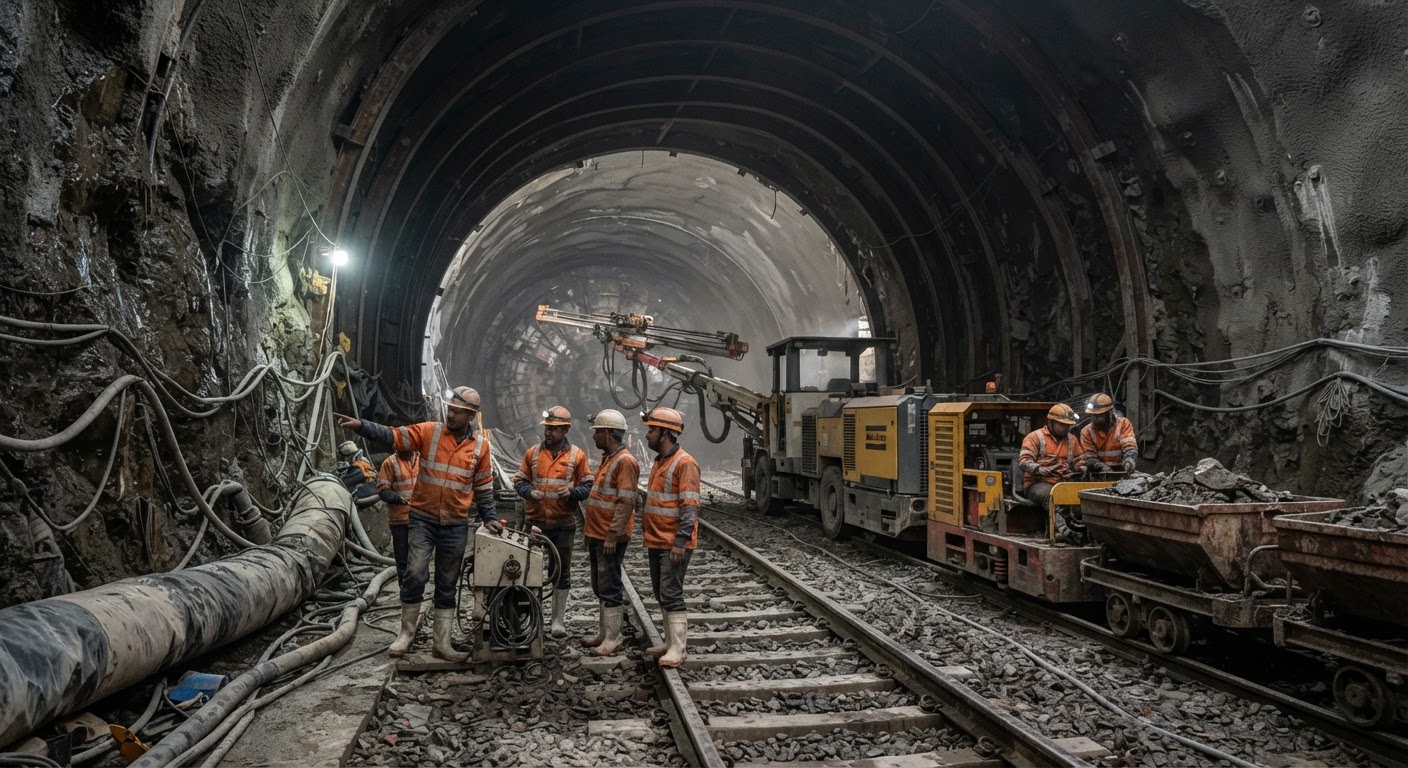
The ambitious Rishikesh Karnaprayag railway project is rapidly reshaping the landscape of Uttarakhand. Designed to conquer the formidable Himalayan terrain, this 125-kilometer stretch is making monumental strides, with a staggering 83% of its entire route passing through tunnels.
Slashing Travel Time in the Himalayas
This massive infrastructure undertaking, managed by Rail Vikas Nigam Limited (RVNL) under the Ministry of Railways, promises to revolutionize connectivity for pilgrims and locals alike. Currently, traveling between Rishikesh and Karnaprayag by road takes approximately 7 to 8 hours. Once the rail link is operational, this journey is expected to shrink to just 2 to 3 hours.
To achieve this feat in such difficult geography, engineers are constructing a complex network consisting of:
- 28 Tunnels to navigate steep mountain faces.
- 57 Bridges to traverse deep valleys and rivers.
Engineering Marvels and Technical Challenges
Union Minister for Railways, Ashwini Vaishnaw, has confirmed that construction is in an advanced stage. The project faces immense geological hurdles, particularly within the 11-kilometer stretches of Tunnel 1 and Tunnel 5. To overcome the "squeezing ground" and soft strata conditions, engineers have implemented specialized modifications to the Tunnel Boring Machines (TBMs).
Current Progress and Milestones
The project has reached significant milestones as of September 2026:
- 78% physical progress has been achieved across the project.
- 97% of tunnel excavation work is already complete.
With an estimated investment of Rs 37,000 crore, this broad-gauge single-track line is a cornerstone of the larger Char Dham Railway project. This initiative seeks to provide seamless connectivity to the sacred pilgrimage shrines of Yamunotri, Gangotri, Badrinath, and Kedarnath.
Beyond its religious significance, the project is considered a matter of national strategic importance, providing enhanced access to border regions and fostering local economic growth.
The project is currently targeted for final completion by December 2029.