Spanish Rail Survivors Demand Safety After Toledo Crash
Survivors of Spain's worst rail disasters demand safety investment after a fatal Toledo high-speed collision killed 68 people.
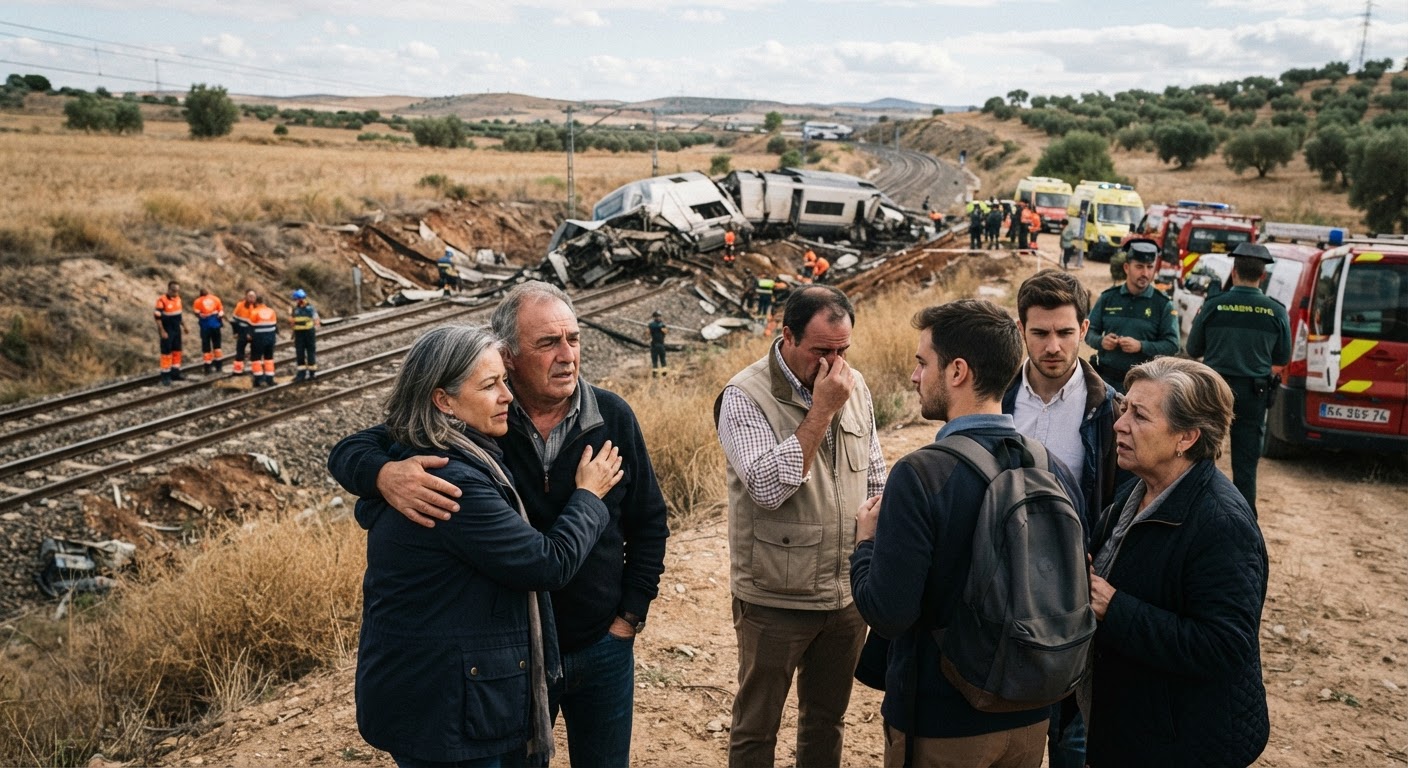
Survivors of Spain’s most devastating rail disasters have issued a formal plea for increased investment in safety infrastructure. The demand follows a catastrophic high-speed train collision near Urda in the Toledo province on October 28, 2026, which resulted in at least 68 deaths and dozens of injuries.
A Devastating Collision on the Madrid-Seville Line
The accident occurred when a high-speed train struck the rear of a stationary vessel on the Madrid-Seville line, causing two carriages to derail. Health Minister Monica Garcia confirmed that emergency efforts have remained focused on rescuing survivors from the wreckage.
This tragedy marks the second major high-speed rail accident in Spain within a single year. It follows a January crash near Adamuz, Córdoba, where track defects claimed 46 lives. In response to the latest disaster, the Spanish government has declared three days of official mourning from October 29 to 31.
Human Error or Systemic Failure?
The investigation into the Toledo collision has already highlighted a complex mix of human and technical failures. Transport Minister Óscar Puente attributed the crash to an "inexplicable" human error by a controller who cleared a train to proceed despite a red light, a situation worsened by a computer malfunction in the LZB signaling system.
However, labor unions—including SEMAF, UGT, CSIF, and SCF—have criticized the government for attempting to scapegoat individual workers. The unions argue that the incident is a result of systemic issues, such as:
- Critical staffing shortages.
- Excessive workloads for rail personnel.
- An over-reliance on aging equipment.
Specifically, the CSIF union noted that they had issued warnings regarding staff working excess hours at ADIF as recently as September.
The High Cost of Neglect
Data suggests that the rapid expansion of Spain's high-speed network may have come at the expense of essential maintenance. According to the European Commission’s 2025 Railway Market Monitoring Report, between 2018 and 2022, Spain directed:
- 83.8% of high-speed rail expenditure toward new infrastructure.
- Only 16.2% toward maintenance.
Furthermore, Spain’s investment per kilometer of rail stood at 95,857 euros, trailing significantly behind the European average of 191,092 euros. Experts like Fulvio Lopane of Northeastern University London have called for a transparent review of engineering and enforcement protocols to address these gaps.
"The country cannot accept two such high-speed rail tragedies within a single year," stated Prime Minister Pedro Sánchez, pledging to strengthen network security.
As ADIF suspends high-speed services in the affected area, the rail sector remains in turmoil. On October 29, train drivers held a nationwide strike to protest chronic under-investment and to demand urgent improvements to national railway safety measures.